In the morning, it was raining. Everything we’d left outside the tent was marvelously dry. We cautiously entered the hut to boil water for coffee, and it was chaos in there. We ate some of the porridge offered to us and scurried to get out.
I began washing dishes, and Greta came over and said, “Don’t worry about that. Please. Just leave it.”
Which was very kind of her, and expedited our speedy exit. Our exit was so speedy, in fact, that Mel forgot her Mammut pack and I left my “The Mountains Are Calling” mug in the kitchen.
We didn’t realize this until we were standing atop a high hill we’d climbed, a bit later. We took a moment to wish our items farewell, then continued on. (That group was heading in the same direction, but to a different set of huts, so it wasn’t impossible that we might run into them again.)
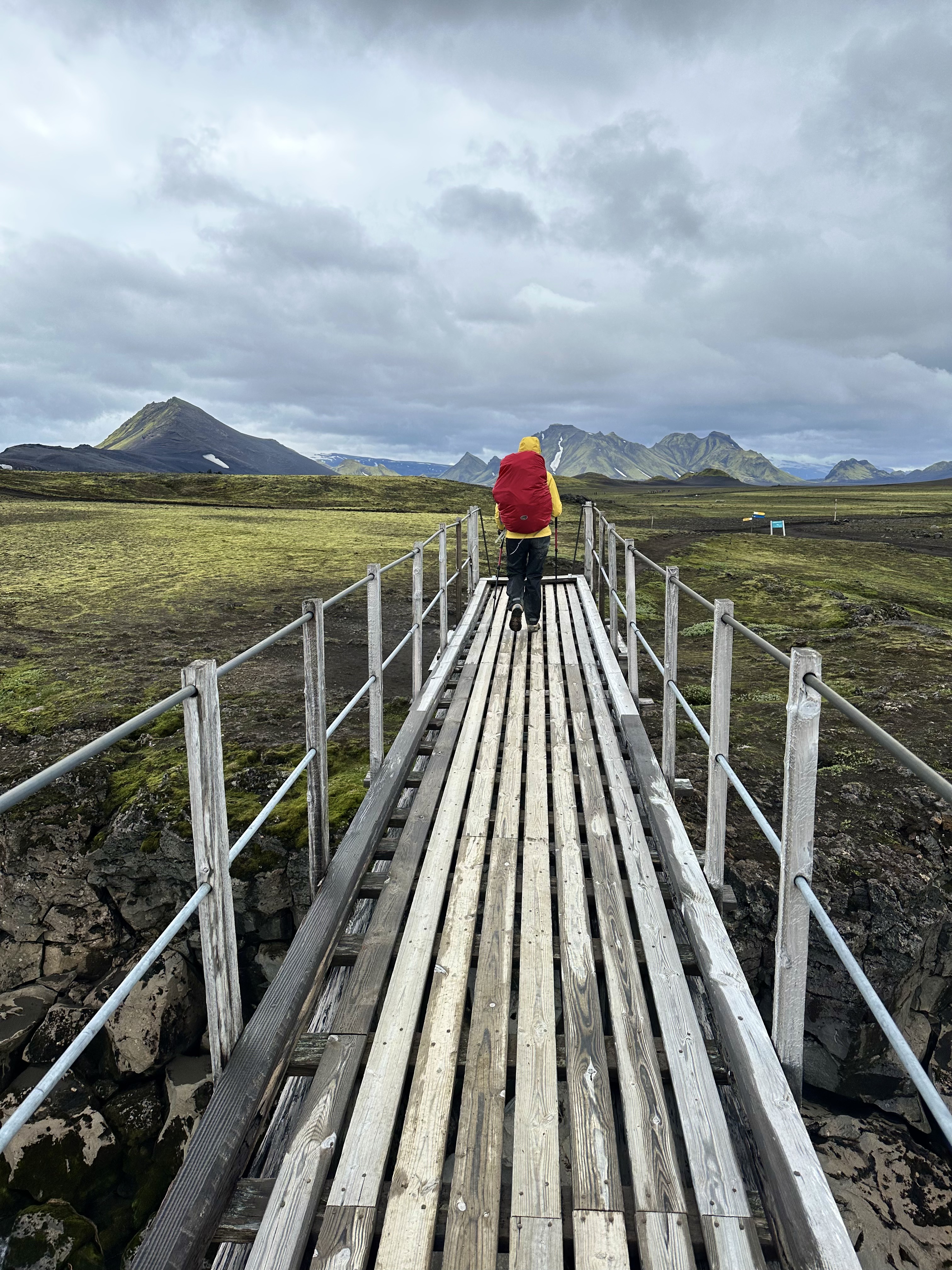
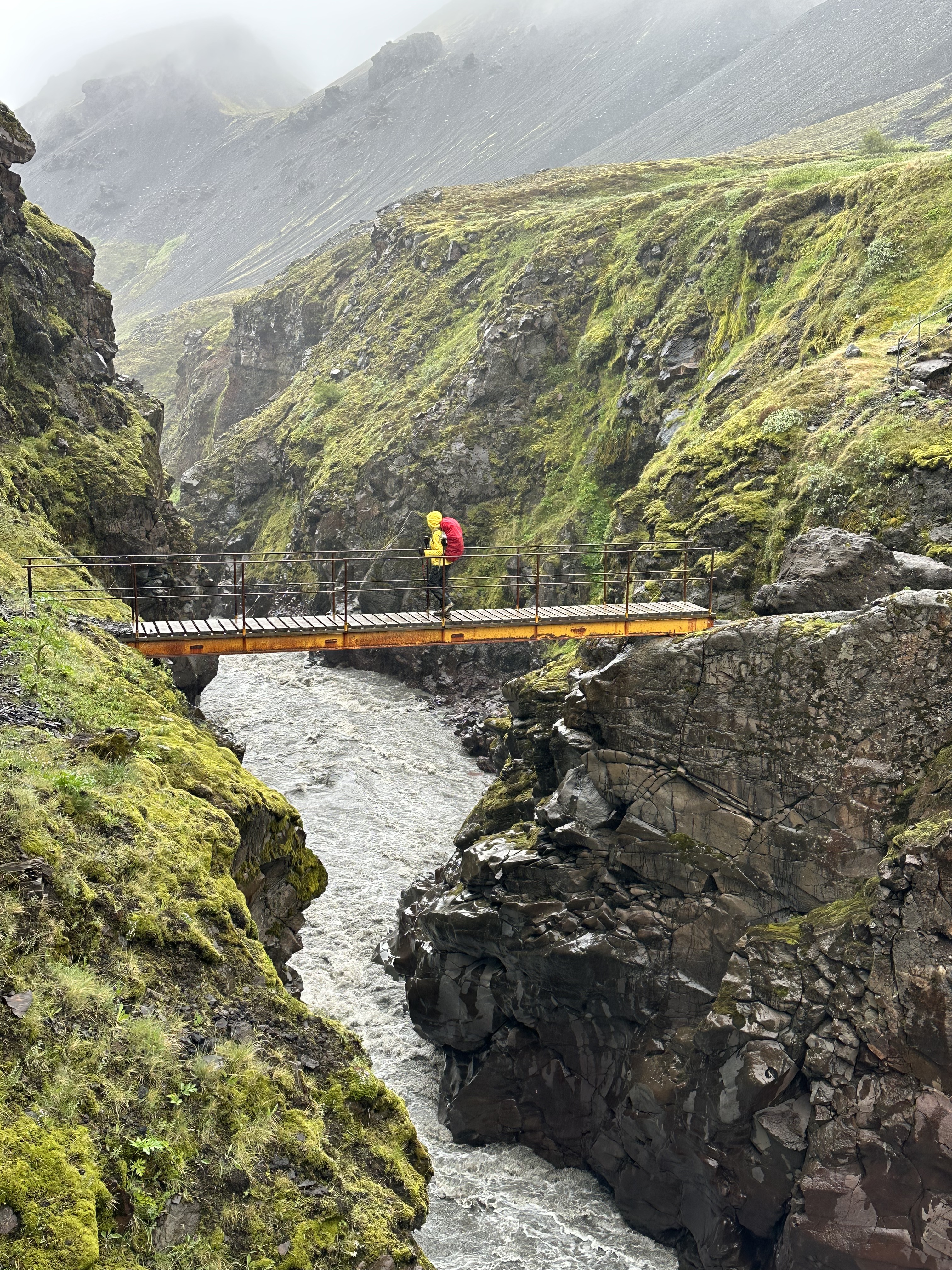
The landscape was basalt, volcanic ash, and a misty wind that kept our skin fresh and damp. Still, there were rivers and gorges and wooden bridges that spanned those rivers and gorges, and it wasn’t freezing.
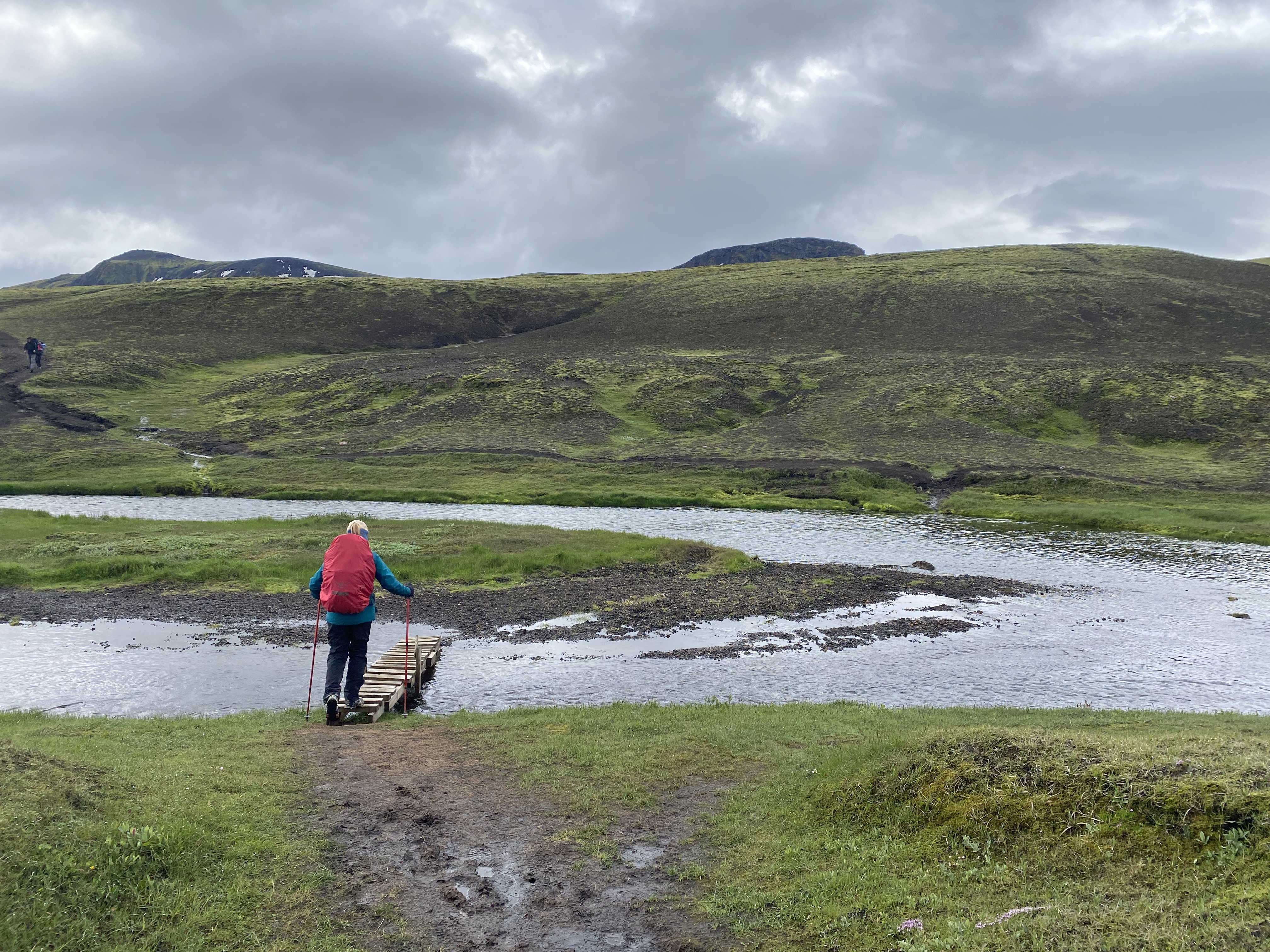

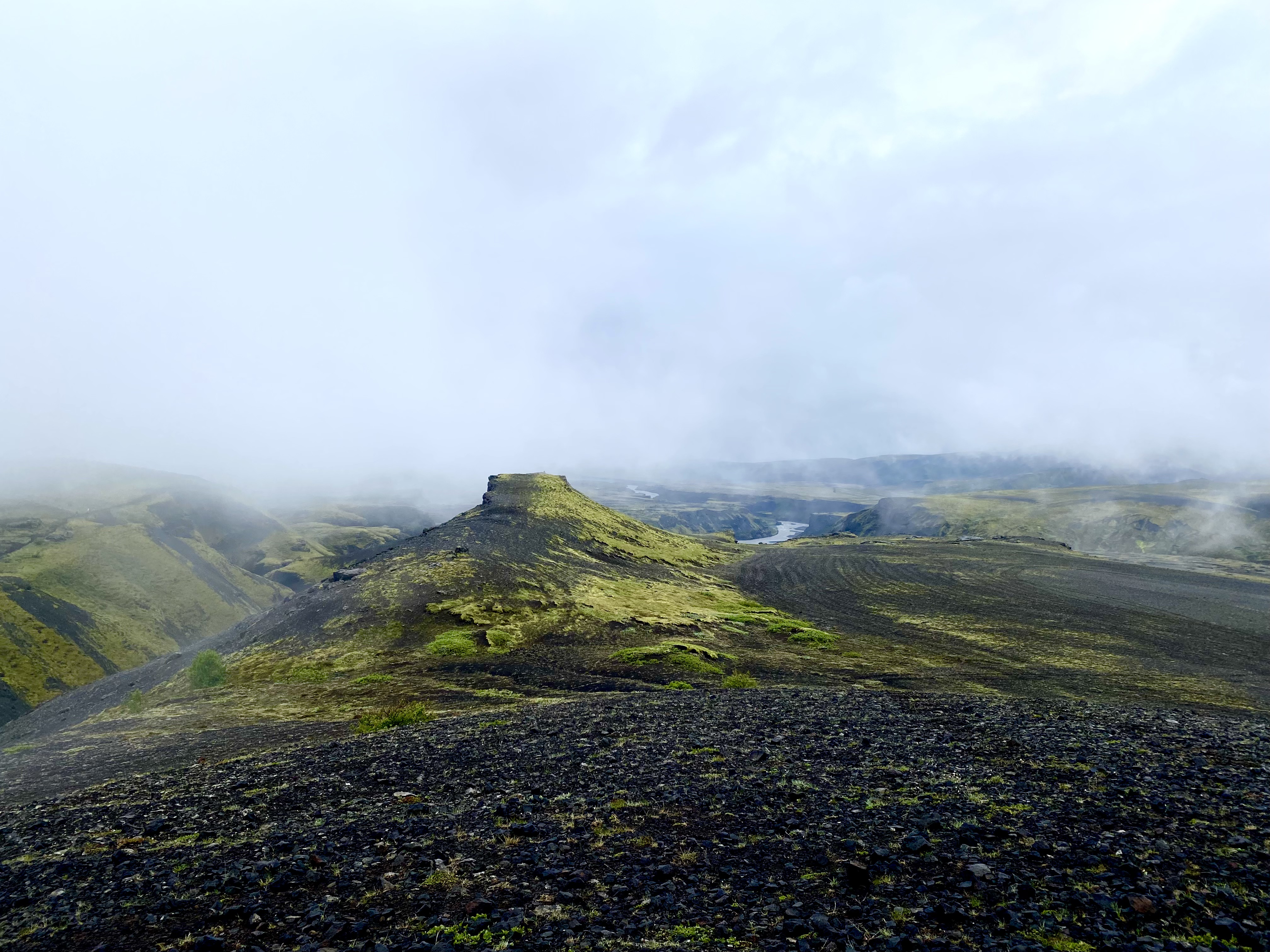
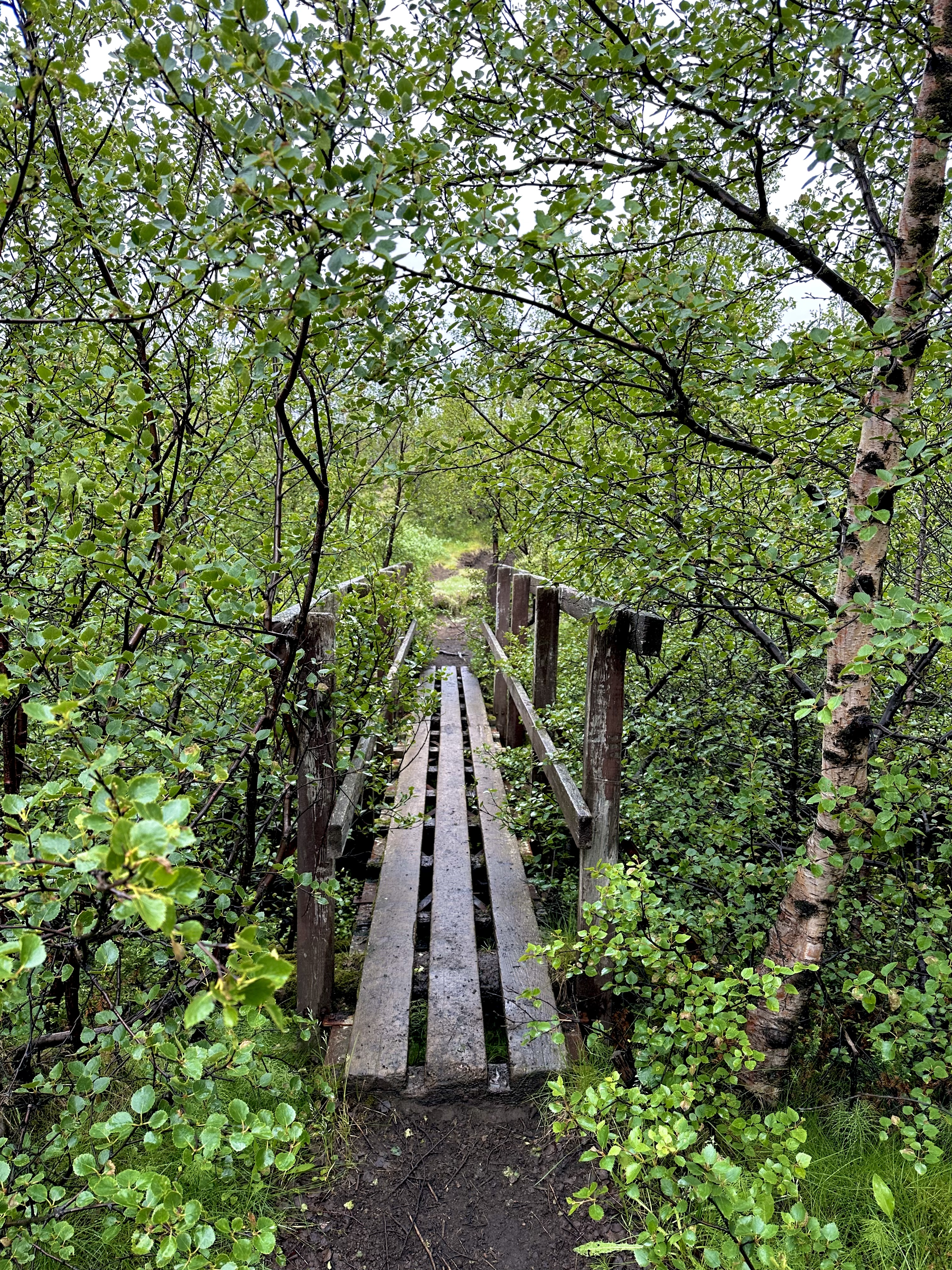
Today’s journey would take us to Iceland’s birch forest, called Þórsmörk. Throughout our trip, people pronounced it Porsmork, because the Icelandic character for “th” looks like a P, but thanks to my book, I knew that Þórsmörk means “Thor’s Woods”, and for all the diversity we’d seen in the landscape, we had not seen trees or a forest at all, and we were curious about what one might look like.
We were so surprised to see some shoulder-high shrubbery in a great cluster that we stopped to take pictures.
“I’m not sure I’d call this woods,” we said, “but I guess I can see how you might.”
The birch trees were gorgeous and stunted, and the path wound through them and took us out the other side after about a minute or two, landing us on the edge of a hill with a view of the Thrönga river, the last one we’d ford before heading toward our Volcano Huts.

We descended the hill and came to the river just as Edith’s group was wading across. It was a joyous sight: they linked arms and crossed the water while Edith stood on the other side, snapping photos. One brightly colored backpack looked as if its walker was being pulled away, but the others in the group propped them up and someone offered a hiking pole from the bank and together, they managed to get across.
By the time Mel and I had taken off our boots, the group was across on a gravel bar, getting ready to put theirs on. We walked upriver to where it looked like their group had crossed. There were two small gravel bars and a set of boot prints on the other side.
The middle was a mystery. How deep was it? For how long? But the gravel bars weren’t too far apart, so I thought maybe that was our way in.
“But look down here,” Mel said, pointing across the river. “There’s boot prints here, too.”
This portion didn’t have a gravel bar in the middle, but the pebbles along this side of the bank went out far enough for me to wade so I could stick my hiking pole down into the deep bit. It felt as though it would be above the knee, at least, and maybe deeper the farther you went on, and the current was strong, by far the strongest of the rivers we’d encountered.
We looked across the gravel bar, hoping that someone in the tour group would point out to us where to cross, as we’d done with our Dutch friends the days before, but everyone had turned their backs on us (they had seen us coming down, and had waved) and were getting their shoes back on.
Unsure of what to do, we decided we’d try to cross where Mel had spotted the footprints across the bank. Worried that my boots would get wet from where I’d tied them to my bag, I retied the laces in a knot and strung them around the back of my neck, between my shoulders and the bag.
We rolled up our pants as far as they would go, just as we’d done the day before, and began to wade in.
You’re meant to unclip your backpack in case you get swept away and need to get it off, so we did, and we angled our bodies upriver. I went first, wading through the first pebbly bit that was ankle-deep. And then I plunged one leg down into the middle, followed by the other, my fingers in a death grip on my hiking poles. Suddenly, I was waist-deep in the river and the water was a force pummeling me backward.
“Mel!” I cried out, and from behind me, she pushed my backpack so I was more upright. Only one more giant step, then a smaller step onto the opposite bank and then out, but it was a terrifying reminder that nature is powerful, humans are measly, and when it comes to crossing a river, “just send it” does not apply.
Our hiking boots remained dry, but my towel-down method was pointless; my pants had gotten completely soaked and were dripping down my legs, no matter how many times I wrung them out.
Of this particular river, my book has this to say: “The Thrönga is a braided, gravel-rich river that can be crossed by fording from one gravel bar to the next. Usually there are 3-4 channels that you must negotiate. Pick your spots carefully as some areas are surprisingly deep or quick. By this point you are a fording veteran and the river should not cause too much stress.”
Fording veteran.
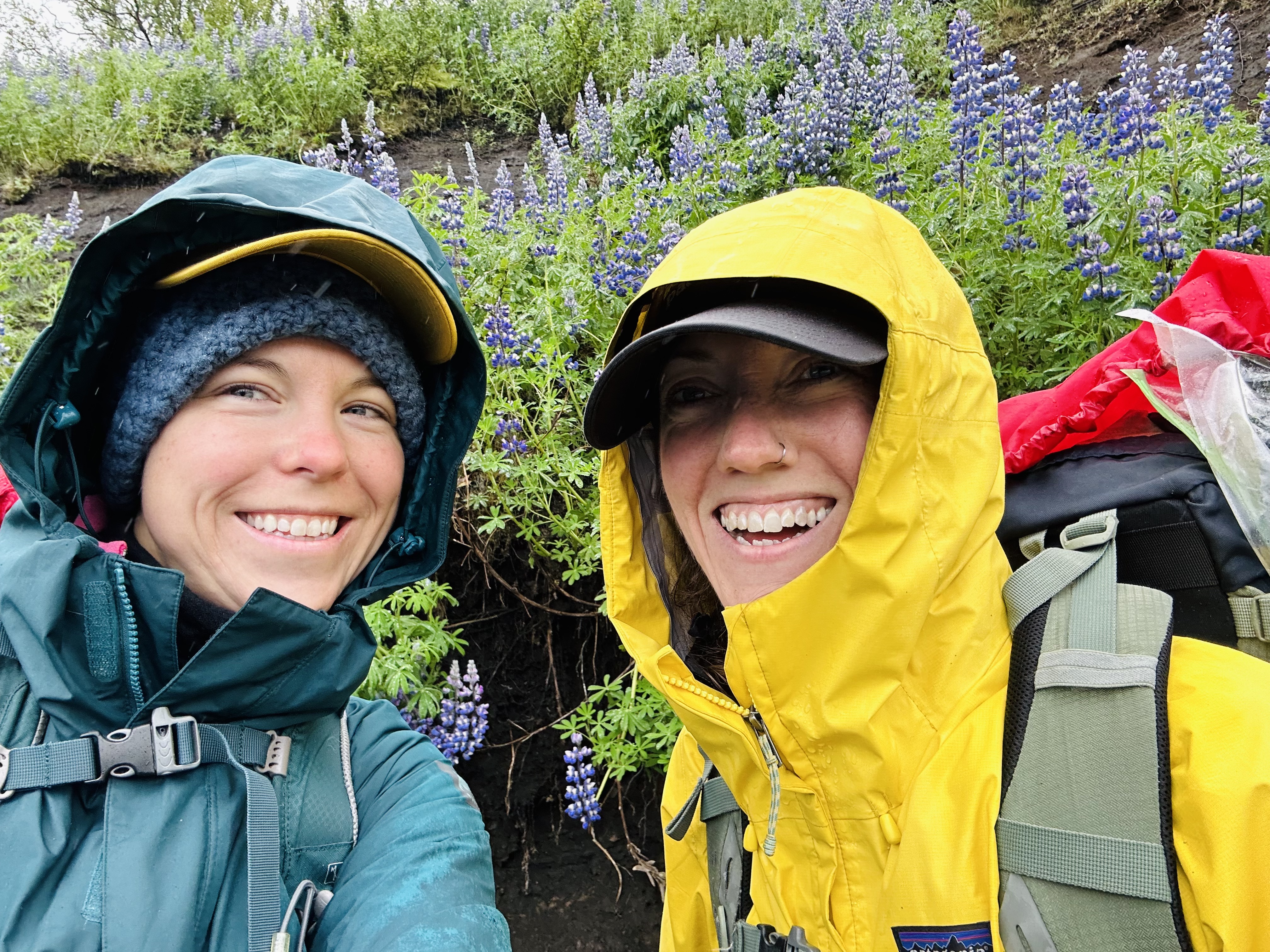
A couple approached the river where we were drying off and we pointed to where we’d come over and said, “Don’t cross there.”
To their credit, they walked up and down the banks before deciding on a different spot, removing their pants entirely, and crossing in their underwear. The water came up to their shins at the most.
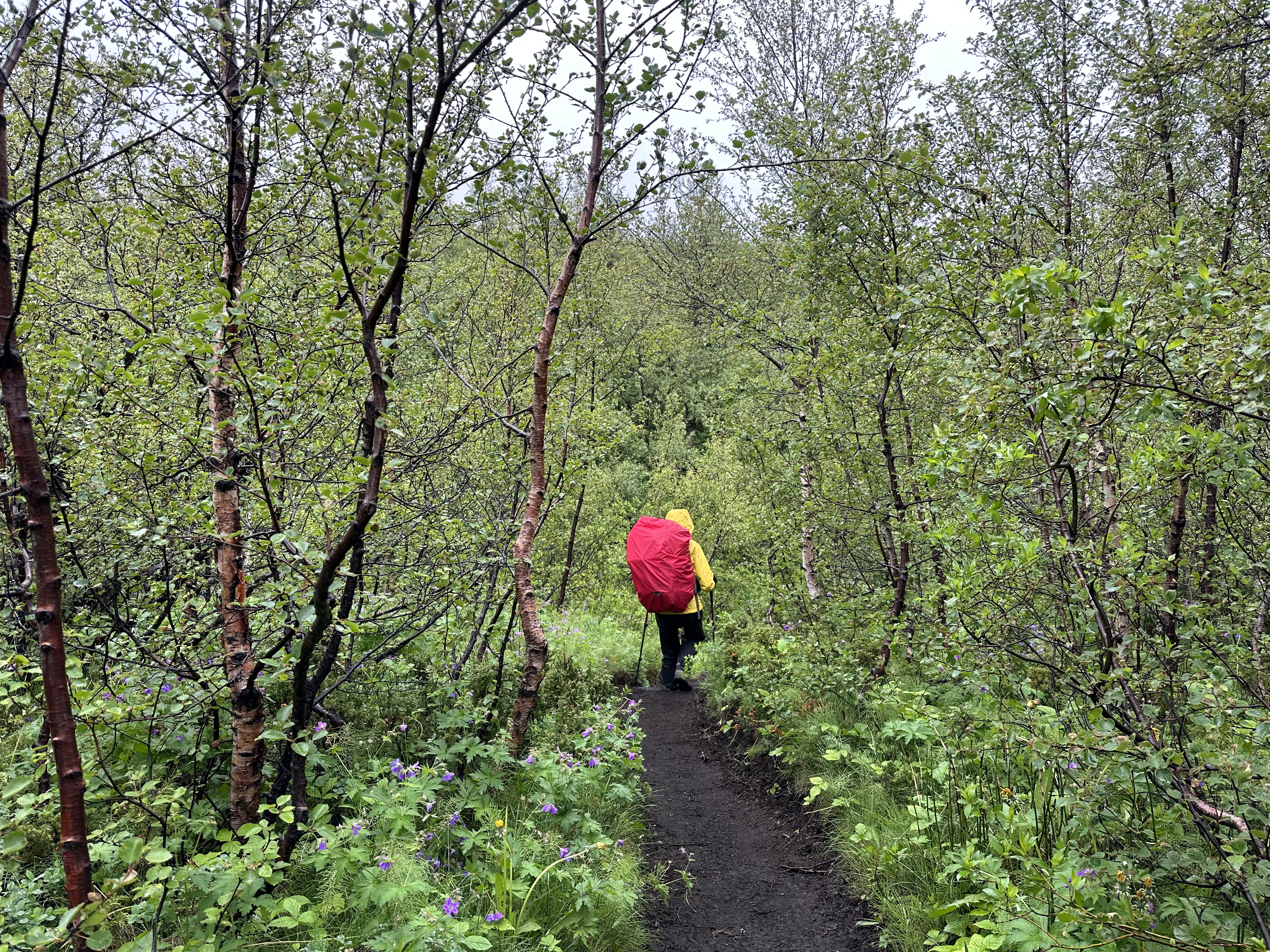
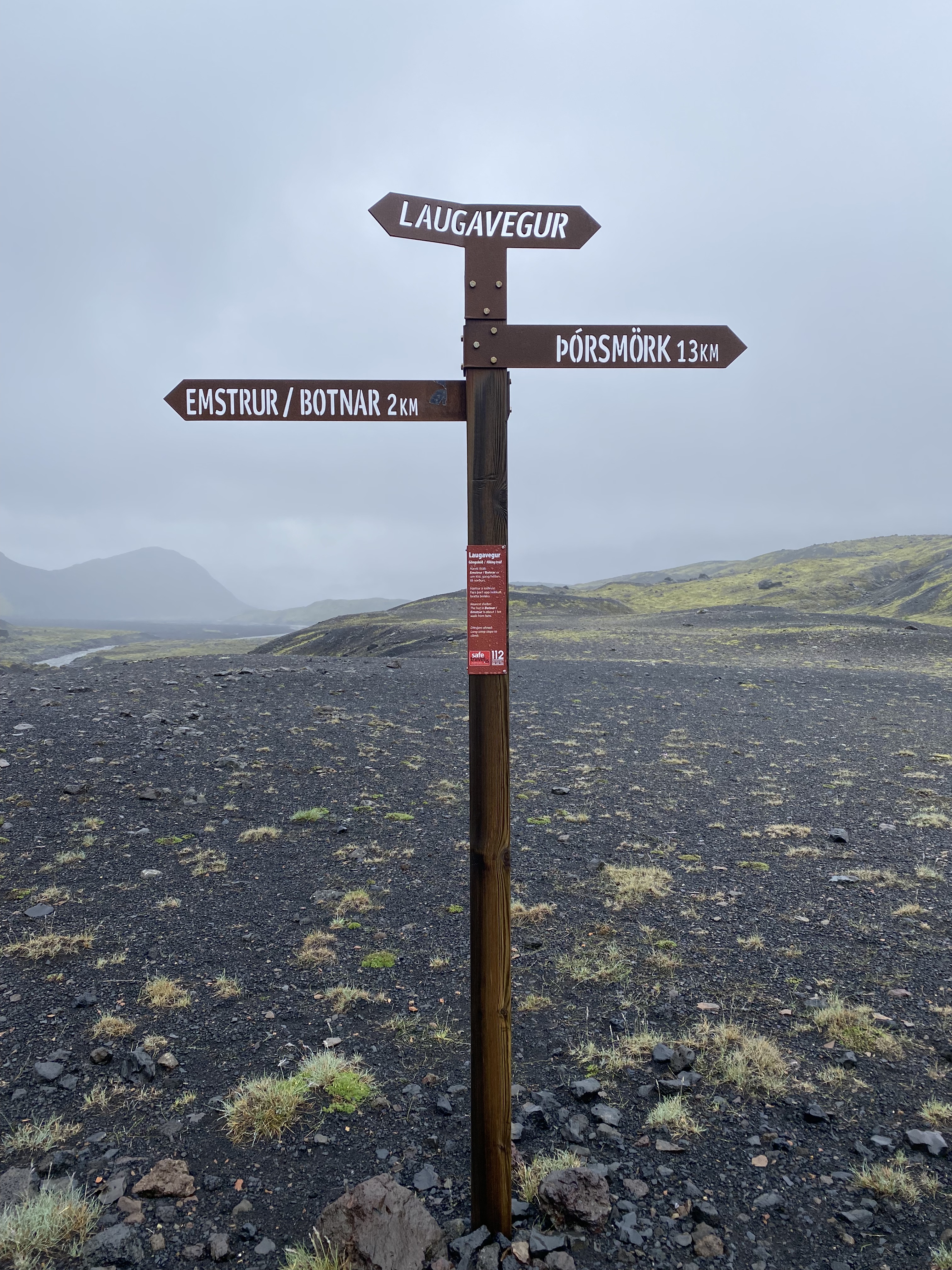
Sopping but fueled with adrenaline that comes with surviving something terrifying, we made our way across the gravel and up the mountain side to where a wooden sign and a vast forest awaited: Thórsmörk. My book informs me that in addition to birch, the forest includes aspen and rowan trees.
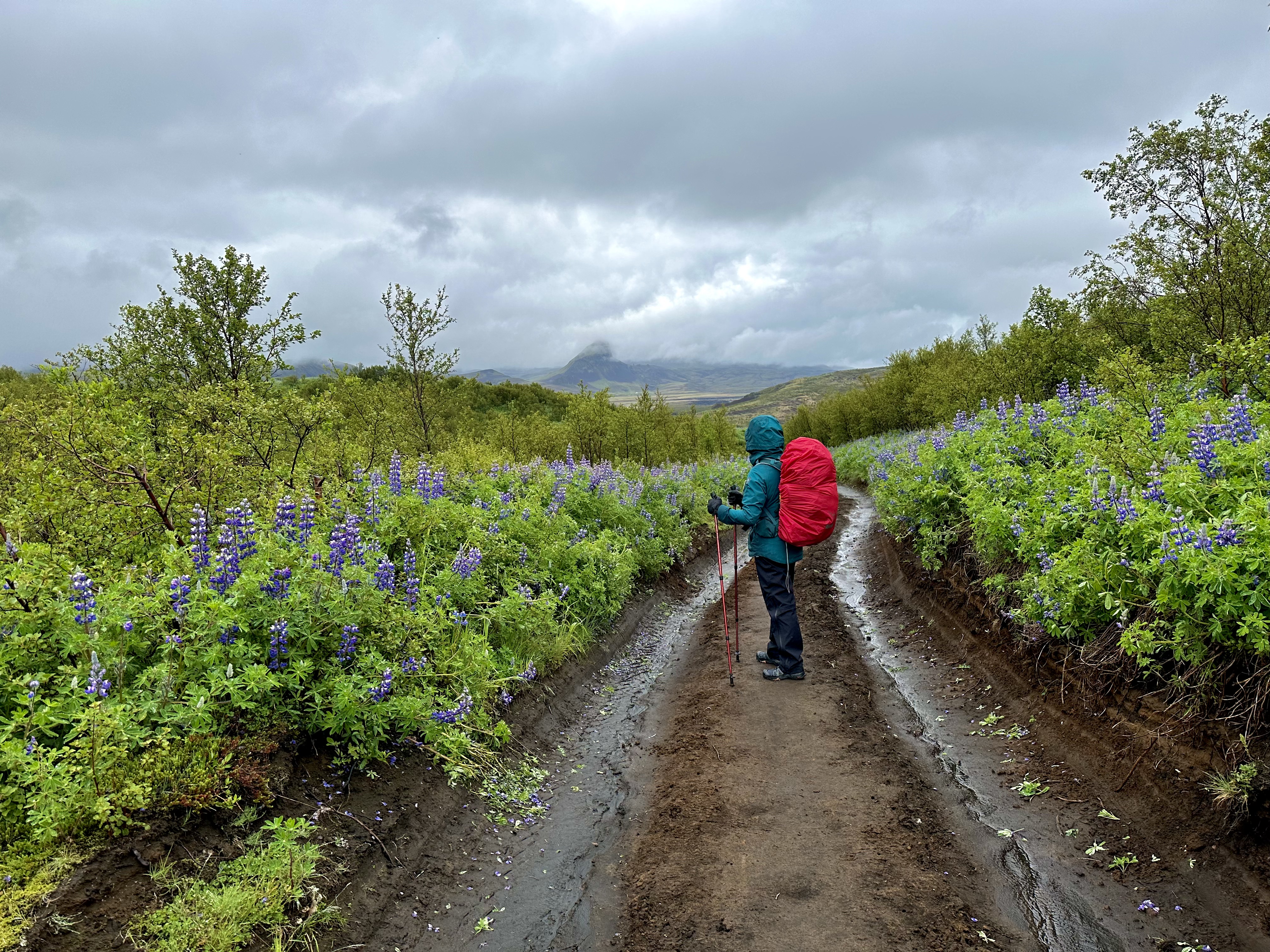
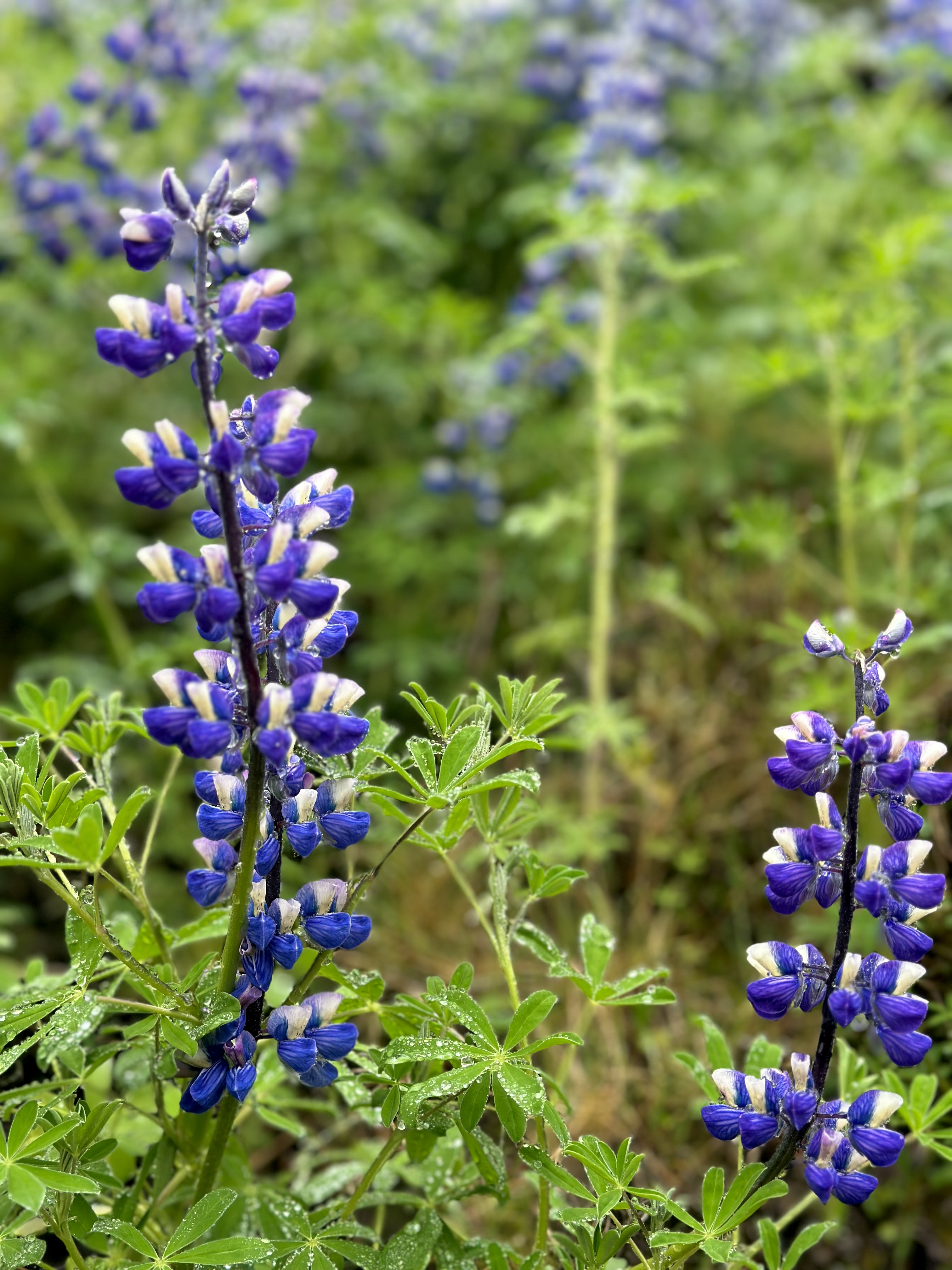
It also included undergrowth splashed with purple and yellow flowers. We soaked in the beauty of it, until I realized I wasn’t actually sure how to get to Volcano Huts.
Unlike the other mountain huts we’d stayed in, Volcano Huts is more of a formal lodging. It offers more than your standard beers and chips: it boasts a restaurant, a bar, hot showers included in the price of your room, which is private, and a hot pool and sauna. Proper swank compared to everywhere else.
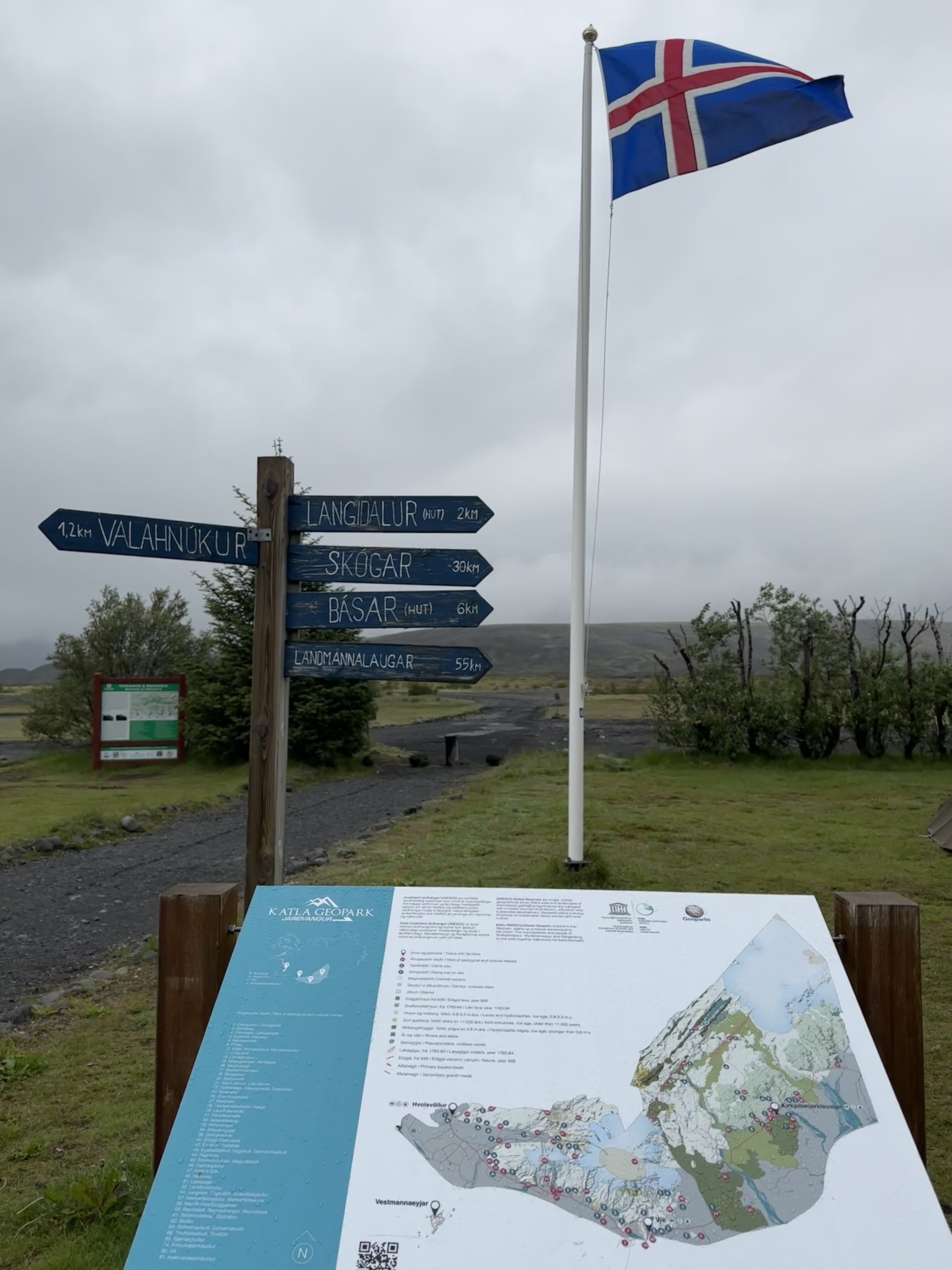
Luckily for us, we came to a sign a short way up the trail that included a map. The huts that our Australian friends and the tour groups would stay in were 2 kilometers over the hill, but Volcano Huts were about 1.8 kilometers down.
Let me tell you: when you are dirty, soaking wet from the waist down, and tired, Volcano Huts is an oasis. We checked in and were given a room key. Our room was in a large building with several other private rooms, but they were exactly that: private. Mel and I opened the door to small, but clean and quirkily decorated space with a bunk bed and a window overlooking the field outside, which also doubled as a parking spot.
Our building had two bathrooms – two! – with toilets and sinks and soap and paper towels. Our beds had towels on them, so we immediately grabbed our shower things and located the showers. They were outside in what looked like a storage unit, but they were hot and had plenty of room to hang up your things and a stool to lay clean clothes on.
Emerging from them, we felt like new people.
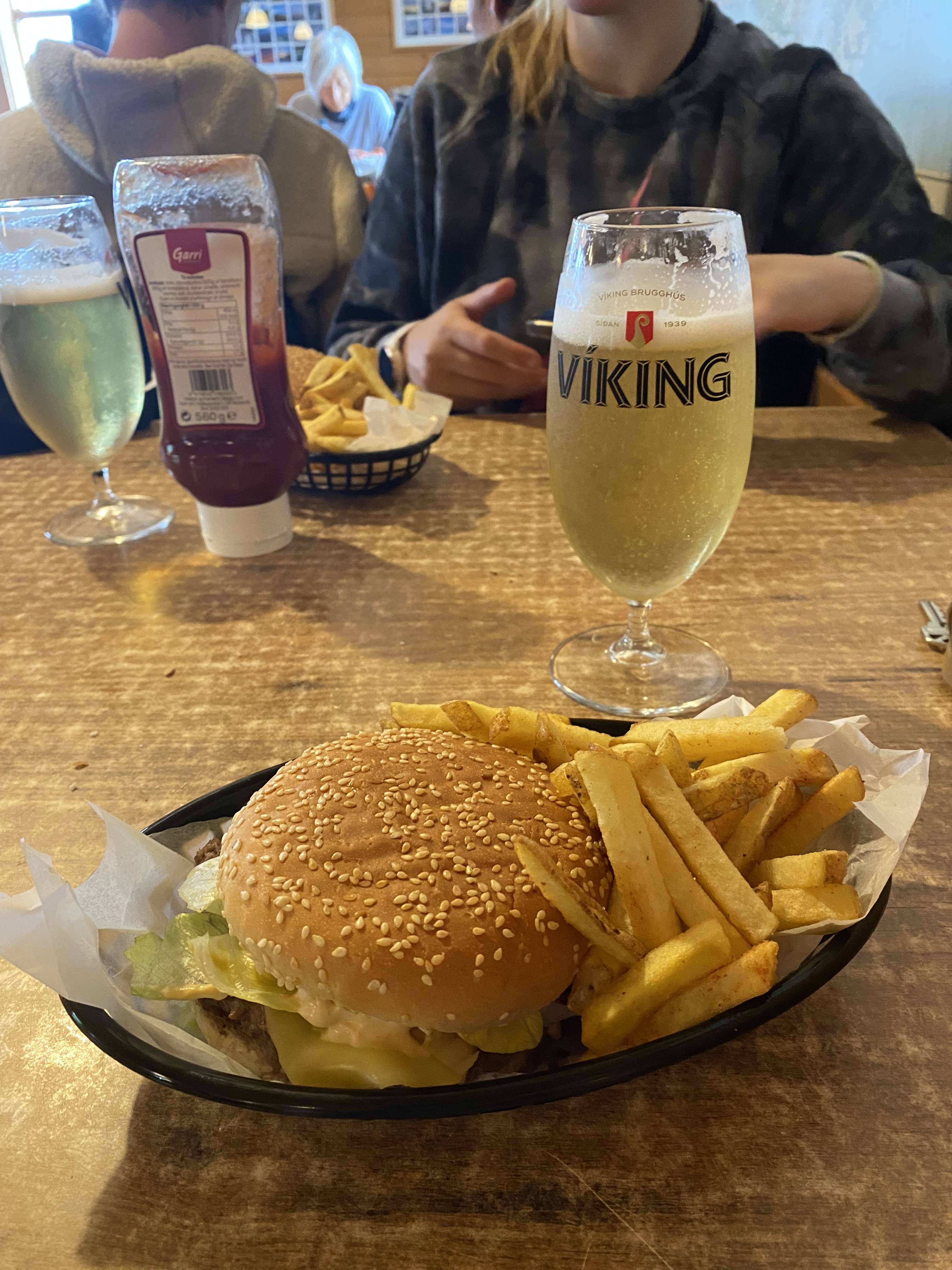
In our room, we draped our socks and river shoes over the radiator (this is when a third pair of shoes comes in handy), relaxed for a few, and then went to the restaurant for burgers, beer – on tap, Einstock, oh joy! – and a chat with the Dutch guys, who were also staying there.
We were asleep in no time and awake with no rush in the morning. We sampled the breakfast buffet while the table behind us talked about earthquakes and prepared to go out and scout locations for filming that day. They worked for GoreTex, and did not seem to need any other models, though we would have been willing.
Instead, Mel and I decided to do an easy loop hike with an option for a view. This was practically a skip in the park without the 12kg of backpacks we’d grown so used to. We took the uphill path and were rewarded with an absolutely stunning view of the valley: rivers converged, gorges stretched on for what looked like eternity, volcanoes loomed in the distance, glaciers and ice caps glistened in the passing sunlight.
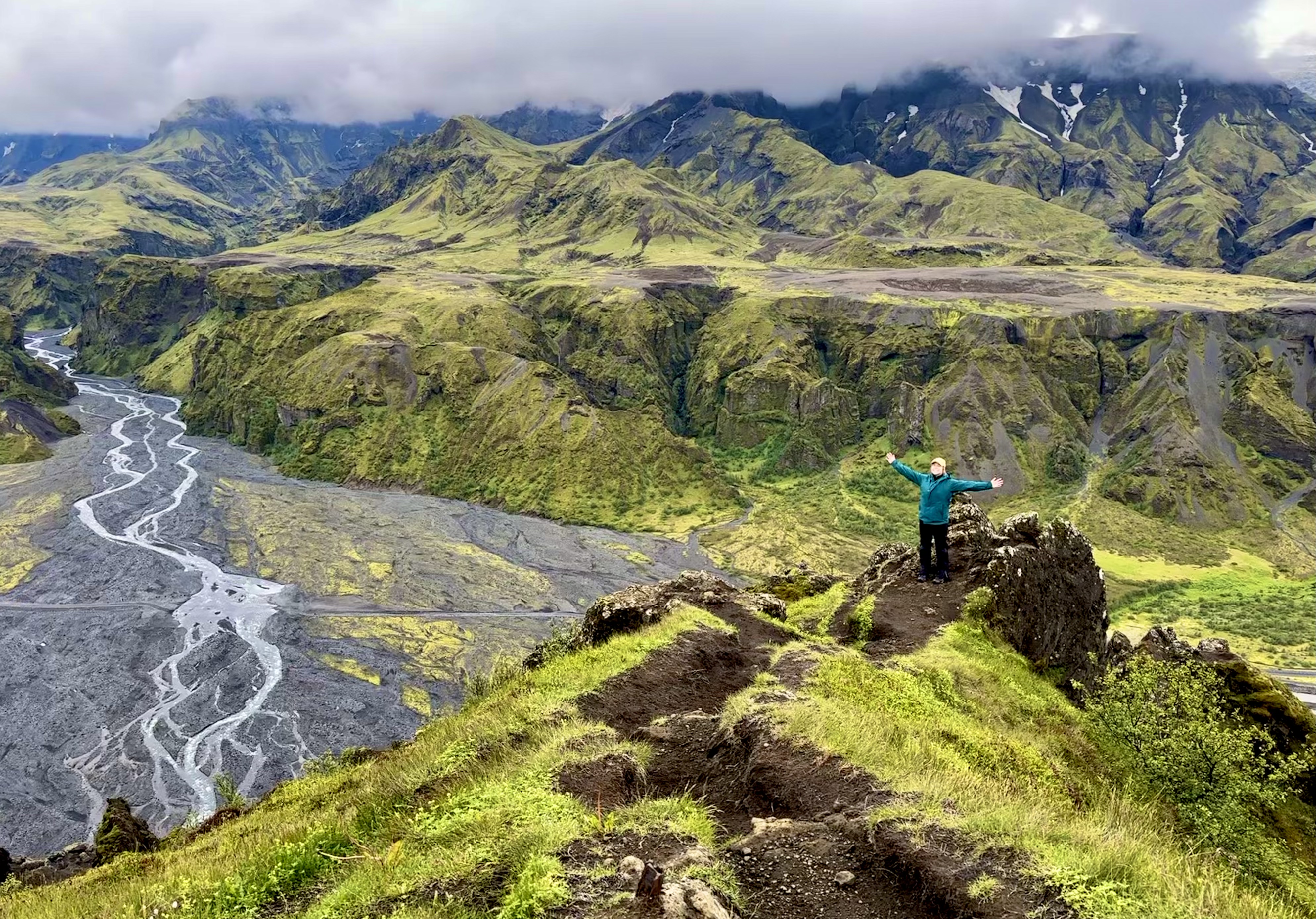
For entertainment, we watched as, far below, white SUVs approached the rivers and crossed them. This is another thing I love about Iceland: anywhere else, this back country would be a tourist haven. The gorges, we guessed, would become zipline spots, and buses would come and go easily.
But Iceland sees its back country and its rivers and it does not build bridges; you better have the right car to get across, and you better know how to drive it. I love that it’s hard to get to, and it’s wild, and it’s enough.
We began our hike down, and as I looked up, there was Greta! Her whole group in tow behind her, they were heading up for their own day hike before their bus came to take them back to Reykjavik.
At the end of the group was the man who saved my sandwich, taking some photos with a few of the other kind people. The woman he was with told us that they’d had a birthday dinner the night before, since her birthday was coming up.
As a gift, someone had drawn a map of their hike and everyone had signed it. There had been dessert and candles, and it was all rather touching.
“Did either of you lose a Mammut pack?” asked the man. “We figured it was one of yours, and I’ve been carrying it around in case I saw you.”
He unzipped his pack and reunited Mel with her pack. My mug was forever gone, but the kismet of our meeting was not lost on us. And while we figured we would see them on the bus back to Reykjavik later, it turned out that they were on a completely different bus. So if we hadn’t done this hike, we would not have run into them, and Mel’s Mammut pack would be living a different life right now.
They advised us to take a detour on the way back and explore a waterfall in a cave that you need to cross boulders to discover, and we did. It was worth it.
Back at Volcano Huts, we asked about their hot pool.
“Well, it’s not actually a hot pool anymore,” the woman told us sadly. “There was an earthquake, and it shifted things underground and…now it’s more of a warm pool. Maybe you want to use the sauna first, and then go in.”
Mel used the sauna and I took another shower, and we spent the rest of the afternoon, until the bus arrived at 4, sitting in the restaurant and relaxing.
Our bus forded several rivers on its way back to Reykjavik. And while I love the city and its restaurants and our quaint hotel, and while I was immensely grateful to not be carrying my backpack around anymore, it was a bittersweet farewell to the hike I’d been looking forward to for 4 years, and Iceland’s dramatic, sweeping countryside that is not so easily accessed.


Categories: Iceland
 Lost Among Latitudes