Iceland is unlike any place I have ever been. I suppose you could say that about lots of places – Rome’s ruins and its Chianti and orange trees are distinctly Rome, and the brightly-painted bowls and soft scarves of a Turkish market are difficult to duplicate. What I mean is, Iceland’s landscape is so otherworldly that nowhere on Earth seems quite like it.
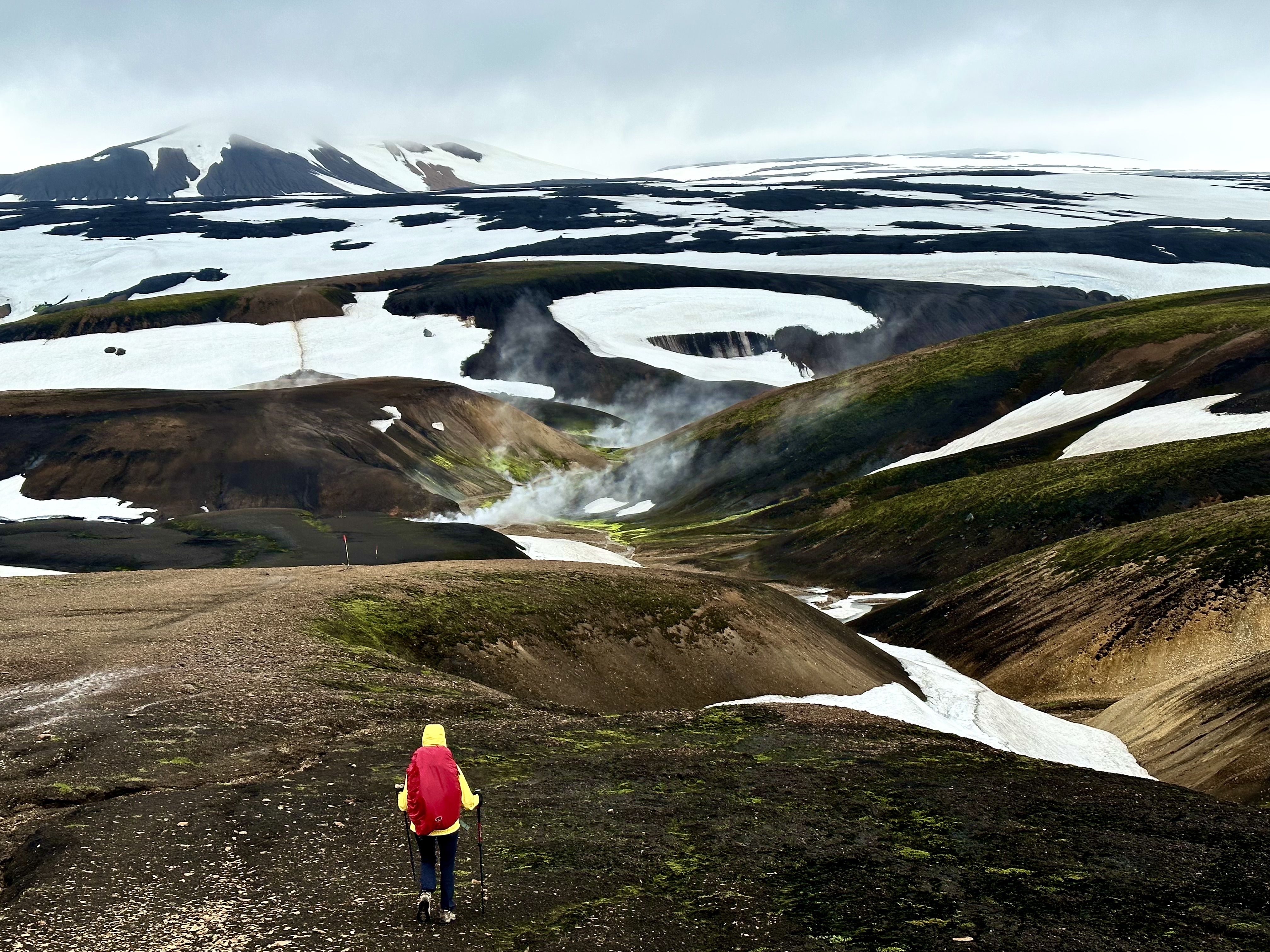
Driving from Keflavík to Reykjavík never fails to awe me: the cold North Atlantic, jagged black volcanic plains rolling out for miles towards the horizon, mossy rocks rising up from the sudden green along the road – even this routine drive is stunning.
So imagine my joy when, a few years ago, I stumbled upon the Laugavegur Trail, a 55-kilometer trek from Landmannalaugur – a place unreachable for most tourists due to its being tucked away beyond the labyrinth of Iceland’s gravel F-Roads, which are often off-limits to rental cars for reasons that will soon become clear – to Þórsmörk, home to Iceland’s birch forest. (Until this trip, I was unaware that Iceland had a forest at all.)
Back in 2019, after doing some research, I contacted Ferðafélag íslands and reserved huts for the hike. Tent camping is also possible, but everything I’d read about the warmth and ease of the mountain huts made them seem like the better choice. Also, I didn’t have a great tent and wasn’t sure how I’d feel about schlepping my tent around on the hike.
Over the course of the 4-day hike, my friend and I would stay in 3 different huts. I received confirmation that I had 3 huts over the course of a few days in July of 2020. Of course, we all know how that turned out.
Luckily, I was able to hold on to my vouchers and tried to reschedule post-COVID. Back in August 2022, they notified me that this would be my last chance to use the vouchers before they expired. I sent them some possible dates, and they confirmed: I’d have the huts for 2 people from June 26-29.
In need of a hiking buddy, I asked my friend Mel. Parkour and American Ninja Warrior athlete, coffee connoisseur, and overall good company, I figured Mel would be a fabulous hiking companion – and she was.
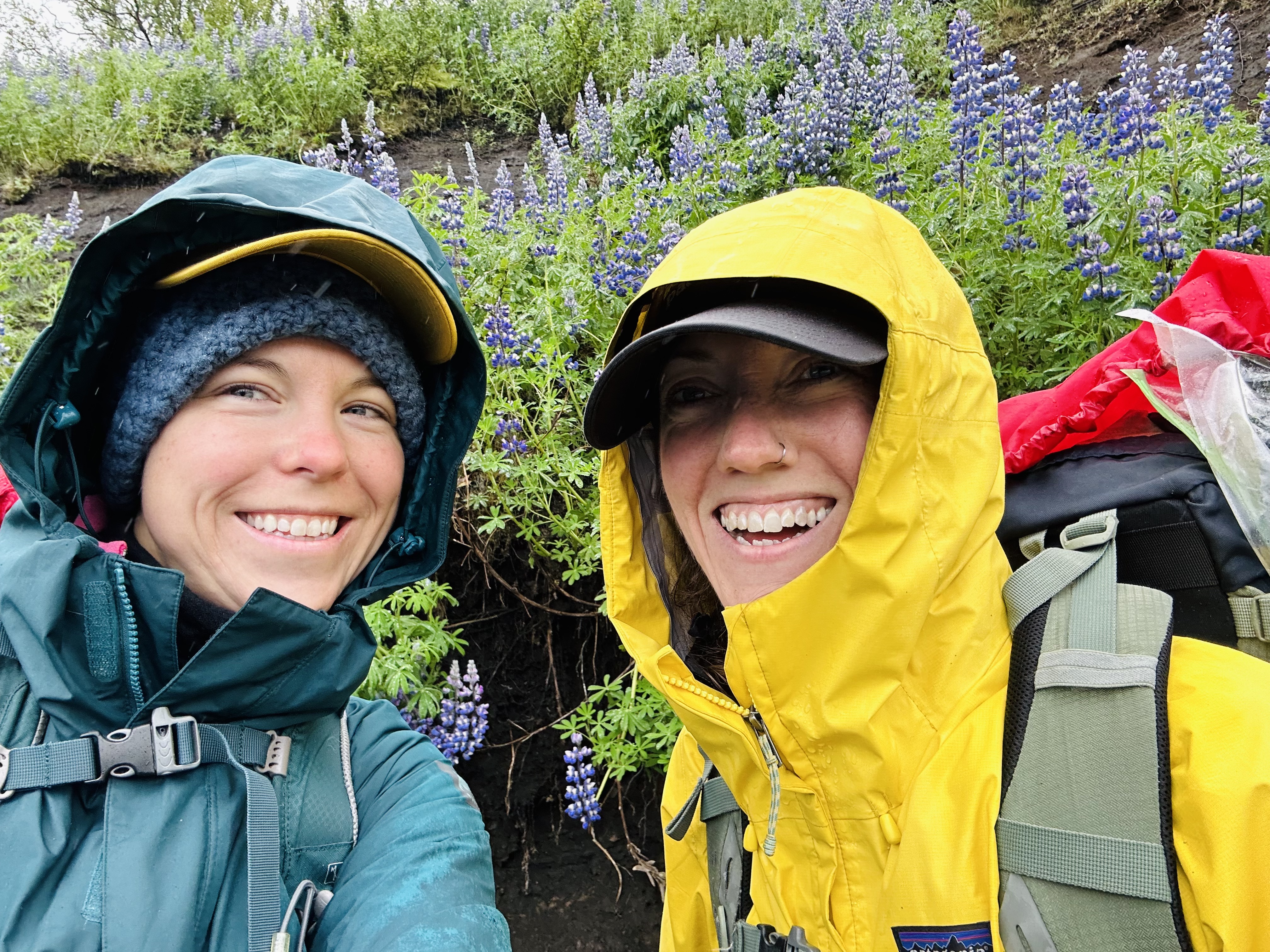
Mel had never done a long hike before, and much to her credit, she agreed to go even though it was out of her comfort zone. Equally endearing is that she trusted that I knew what I was talking about when I described how challenging the hike would be and what we would be doing.
For most of the year, the hike lingered somewhere on the periphery of our busy lives. It wasn’t until February that we decided we should probably book a few things, like hotels, bus transfers, and maybe do some research into what to pack.
Our plan materialized. We would fly to Reykjavik the day after school got out and spend two nights in Hotel Von, a boutique hotel located in a perfect spot downtown (was it fate that the hotel sat on Laugavegur St in Reykjavík?). We would leave our suitcases at the hotel and head off for our hike with just our backpacks, and then return to Hotel Von when the hike was over for another day and a half in Reykjavik, enjoying the creature comforts of civilization.
We used Reykjavík Excursions to book our bus from Reykjavik BSI to Landmannalaugur, and the Highland Bus service to book our trip back from Thorsmörk. (Þórsmörk is named for the god Thor, and means “Thor’s woods”. The Icelandic character for “th” is “Þ”.) Concerned that the 16 km distance on the last day of our hike would be difficult to accomplish and that we’d struggle to make the 4pm or the 7pm Highland Bus back to Reykjavík, we booked one night in the Volcano Huts at Þórsmörk, where we’d spend the day relaxing in their hot pool and leisurely catch the 4pm bus back on Friday rather than scrambling to finish our hike and pray we didn’t miss the bus.
For packing, we researched several blogs and spent a good deal of money at Transa in Basel (grateful for my DoE voucher!). In the end, we both carried about 12kg on our backs, including some of the following:
- Two pairs of long hiking pants, plus a pair of leggings
- A pair of shorts
- Four T-shirts
- A flannel
- A puffer vest
- A cap
- A warm hat
- A sweatshirt
- A set of underarmor, plus an extra long-sleeve
- Rain pants
- Raincoat (my Patagonia Torrentshell was a great purchase)
- Five pairs of socks
- Five pairs of underwear
- Two sports bras
- Deodorant
- Biodegradable soap for washing dishes, hair, and skin
- Dry bags
- Plastic bags
- A sleeping bag (My NorthFace Cat’s Meow was an absolute win on this trip)
- Hiking poles
- Hiking boots
- Tevas (for river crossings)
- GoreTex windproof gloves
- Bowl and cup that pack flat, plus camping silverware
- My “Mountains Are Calling” mug (if you’re ever at the hut in Emstrur, you might see it – enjoy a coffee and think of me!)
- 5 dehydrated dinners
- 3 dehydrated breakfasts
- A 3L Camelback (I never used, because I couldn’t pack it in after my bag was full)
- A phone charger/power bank
- SteriPen…also never used. Some people drank directly from the stream
- Rain cover for the backpack (indispensable)
- Plastic bags to put dirty clothes
- Bathing suit
- Camping towel
- First aid kit
- Two rolls of ACE bandage
- Painkillers
- A paper map in a plastic cover
- Coffee
- A pourover filer (this was Mel)
- Waterproof phone case (also Mel)
- Hand sanitizer
- Sunblock (never used)
- Sunglasses (also never used)
- 65L Osprey Kestrel pack
- A Kindle version of the Laugavegur Trail: A Hiking Companion To Iceland’s Famous Trek, by Brian W Zimmer
Looking back, I would have ditched the camping silverware/bowls because the huts have dishes you can use, though those didn’t really take up much room in my pack.
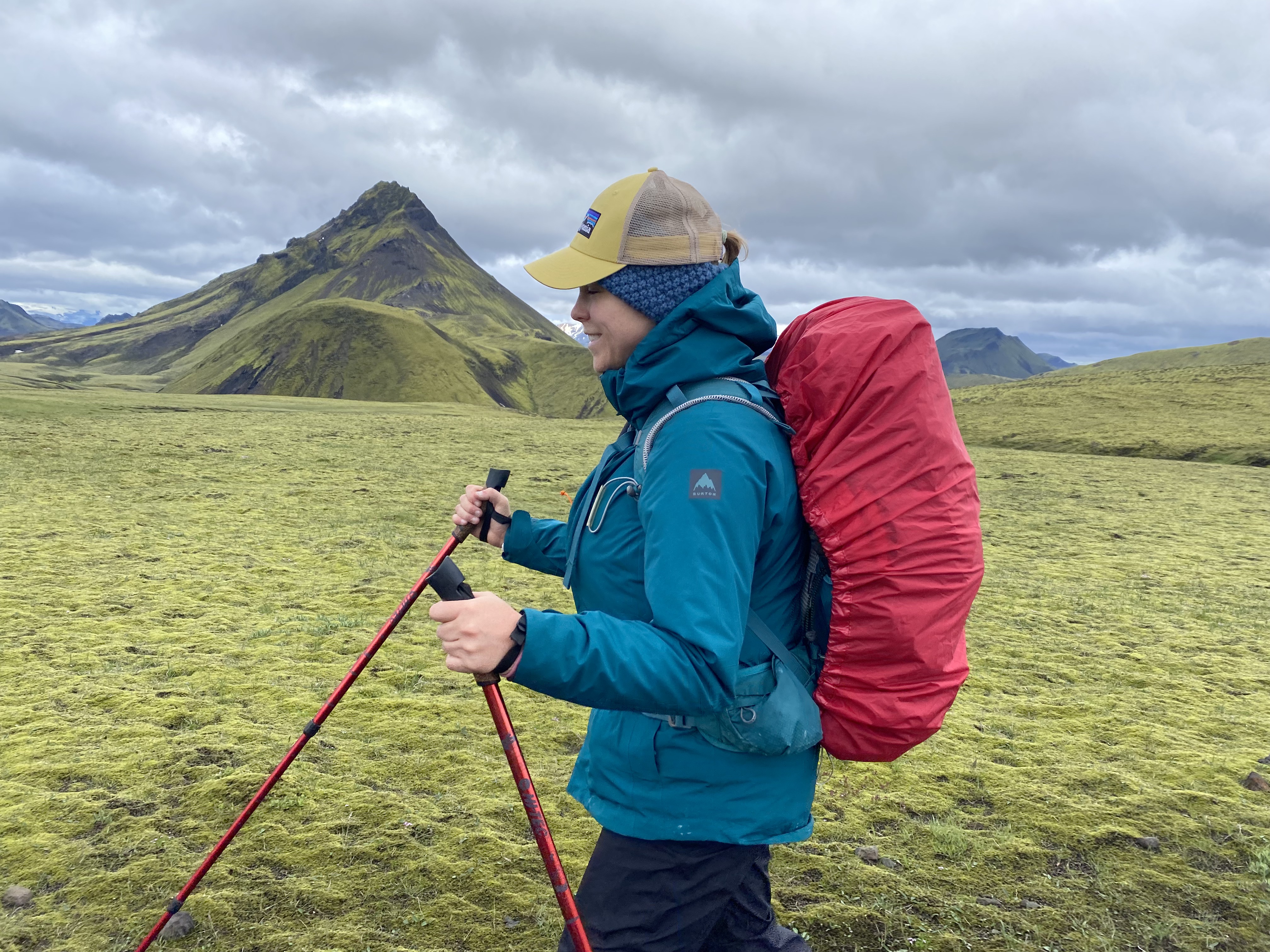
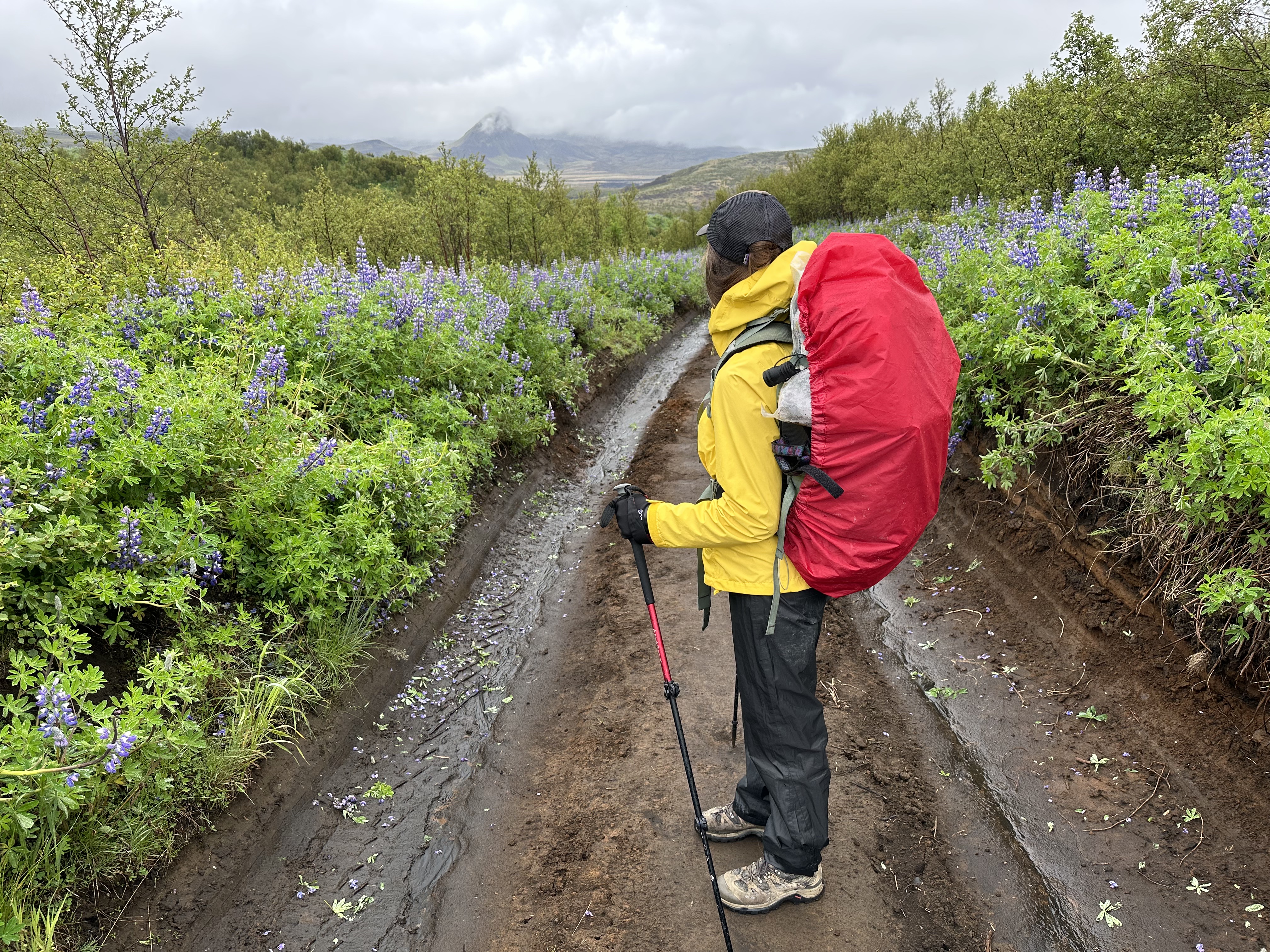
Reflecting, we decided we would have changed the following:
- Bring porridge: the dehydrated meals were inconsistent in terms of how good they were. We would buy tandoori, apple crumble, coconut porridge, and pasta primavera again. We would not buy Jambalaya. (We bought meals by Trek n Eat, which we found at Transa). Instead, we’d pack more actual food – carrots, peppers, limes, porridge, some kind of fresh or dehydrated fruit. We’d also bring something to share with other people we met: candy, gummies, vodka. We had beef jerky, which was a win, and we were able to pass it around and share it with others.
- Bring a third pair of shoes: at the end of the day, our hiking boots were often soaked, leaving us with only our river shoes, which were also soaked whenever we’d crossed a river that day (so, three out of four days). Flip flops would do the trick! We often wished we had something on our feet to wear around the huts.
- Pack more leg wear: so much got wet!
- Pack two pairs of gloves, and be sure one is waterproof. One pair should be warm. Mel had NorthFace fleece gloves, and I only had my GoreTex ones, which were great with the wind but less great in the rain.
- Trail mix cookies were a great idea in theory, but terrible in practice. I dedicated so much time to baking the cookies before we left, because they’re an amazing snack and a healthier, tastier alternative to Clif Bars (which we also had). “You’re going to end up with a bag of cookie dust,” said Dan, as I packed the cookies. I was so determined to bring cookies that I forgot to pack my puffer jacket, my noise-canceling headphones, and a set of waterproof notebooks Dan’s sister-in-law got me for Christmas that I seriously missed the entire trip. In the end, Dan was right; the cookies were crushed before we hit the trail, though I was able to pass around the bag of cookie crumbs and people scooped out handfuls and ate them.

The weather forecast (use Vedur!) for our trip had suggested chilly temperatures, but alternating rain and sunshine, so I figured layers would be best. In the end, it rained every day. Waterproofing and quality rain gear are key! Again, my Patagonia coat was my MVP, and my Decathlon rain pants were a gamechanger on Day 2.

I also spent some time programming the paper map into my OutdoorActive App, which we did check a few times along the way, even though the trail is well-signposted. We didn’t use the paper map at all, but, like the First Aid kit and the SteriPen, I felt better for having it along.
We were also grateful for our hiking poles, especially on downhills, through snow, in the crazy Icelandic wind, and in river crossings.
For a cost estimate on the hike, this is what we spent (for reference, as of July 17, 2023, 1 USD = 131 Icelandic Kronor):
- Bus from Reykjavik to Landmannlaugur: $77 USD
- Huts for 3 nights: 57,000 ISK (for 2 people) [500 KR for 5 minutes of a hot shower, optional, at 2 of the huts] $427
- Volcano Huts for 1 night: $211 USD (for 2 people)
- Bus from Thorsmörk to Reykjavik: 17,998 Icelandic Kronor (for 2 people) = $135
- Hotel Von (2 nights at the start of the hike): $541 USD
- Hotel Von (2 nights at the end of the hike, paid with credit card rewards points): $259.00 – the rest was paid in cash
Most of the huts sell amenities: beers, chips, snacks, candy, water, soda, etc. They also accept credit card, which is cool.
Categories: Iceland
 Lost Among Latitudes