On Friday, October 4, I awoke at 7:00am without an alarm and decided this was a sign to go for a run. The temperature was 32 Fahrenheit and outside the window, the world was a wintry mix. Fat snowflakes were falling and dissolving into puddles in the road. I was undeterred.
Kelly mentioned a set of sherpa steps near a cable car down the road, so I set off in that direction wearing several layers of clothes and rain gear. The water ran in rivulets down the road and dripped off my hat, but the air was arctic and bracing and had the effect of waking me up. I returned to the AirBnB cold and soaked, so I treated myself to a hot rain shower and hung up all my many clothes to dry.
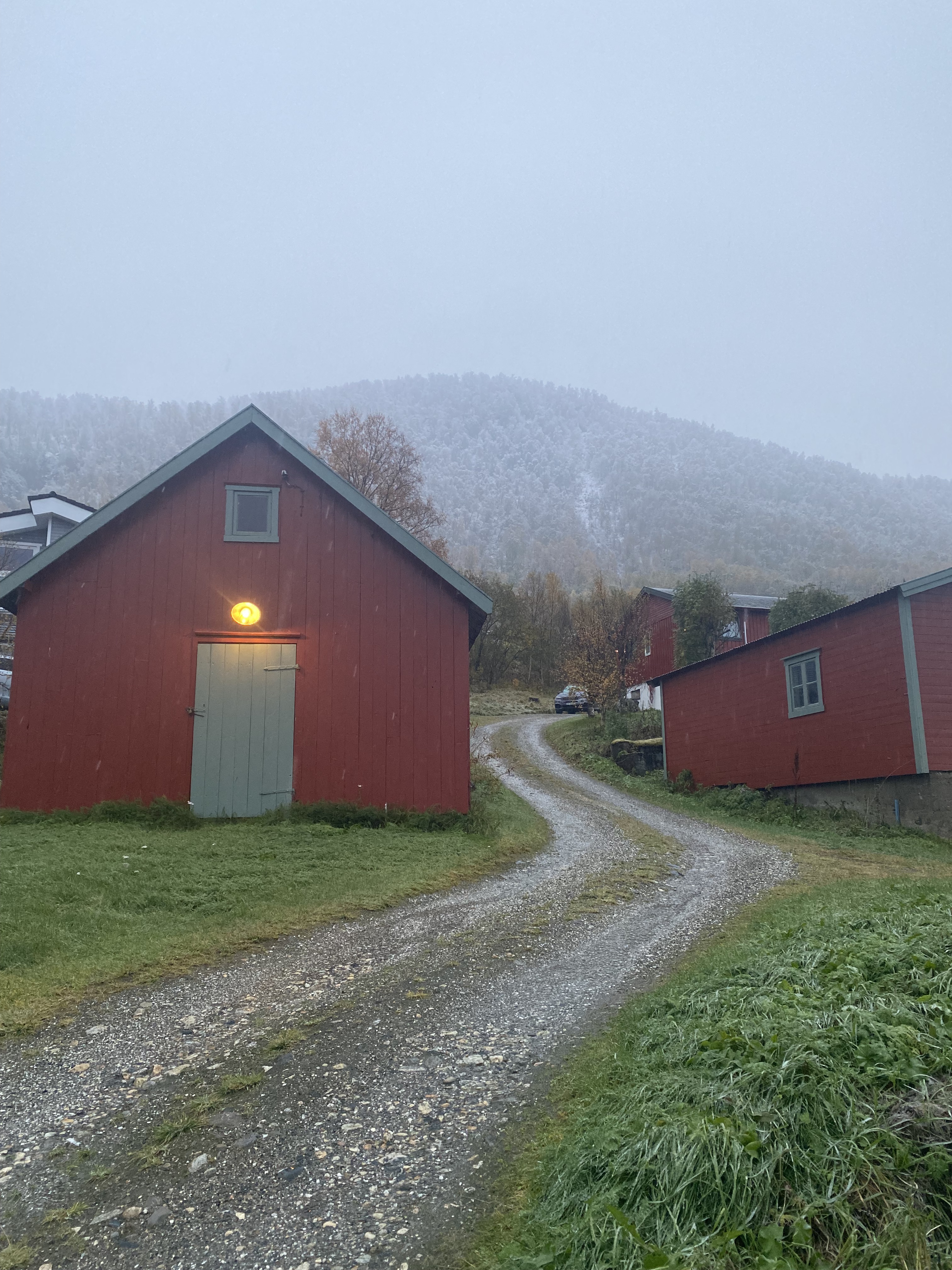
It was one of our trademark long coffee mornings, where we watched the wintry mix outside and sipped many mugs of coffee inside. Dan made a breakfast of eggs while Kelly whipped up some lox with vegetables. It was nice to enjoy the AirBnB space and just relax without feeling a sense of urgency. The only must-do on our list was getting Michael to the lost property office, which closed at 3:30.
We made our way out after 11 or so (who’s to say?), and Dan and I perched up at Risø, a little coffee shop recommended by my Lonely Planet for its “handmade” coffee and open-faced sandwiches. I ordered a brown cheese with raspberry jam, but was told they were out of all jams, so I passed up the opportunity to sample Norway’s brown cheese. Instead, Dan and I sipped coffee and juice and people watched.
Just as a photo came through of Michael claiming his phone back, Dan pointed to a woman sprinting down the road below.
“Her phone just fell out of her back pocket!” he said, pointing at a little rectangle lying in the intersection where buses and cars were speeding by.
“Well go tell her!” I cried unhelpfully. Dan darted down and I watched him appear in the road, grab the phone, disappear, and then reappear, holding the phone in the air. We left it with the baristas, but not before a Norwegian customer nearby complimented Dan on his heroism.
“I’m a filmmaker,” he told us, “and I just saw you run down there and couldn’t help but hear that song in my head, ‘I can be your hero, baby.'”
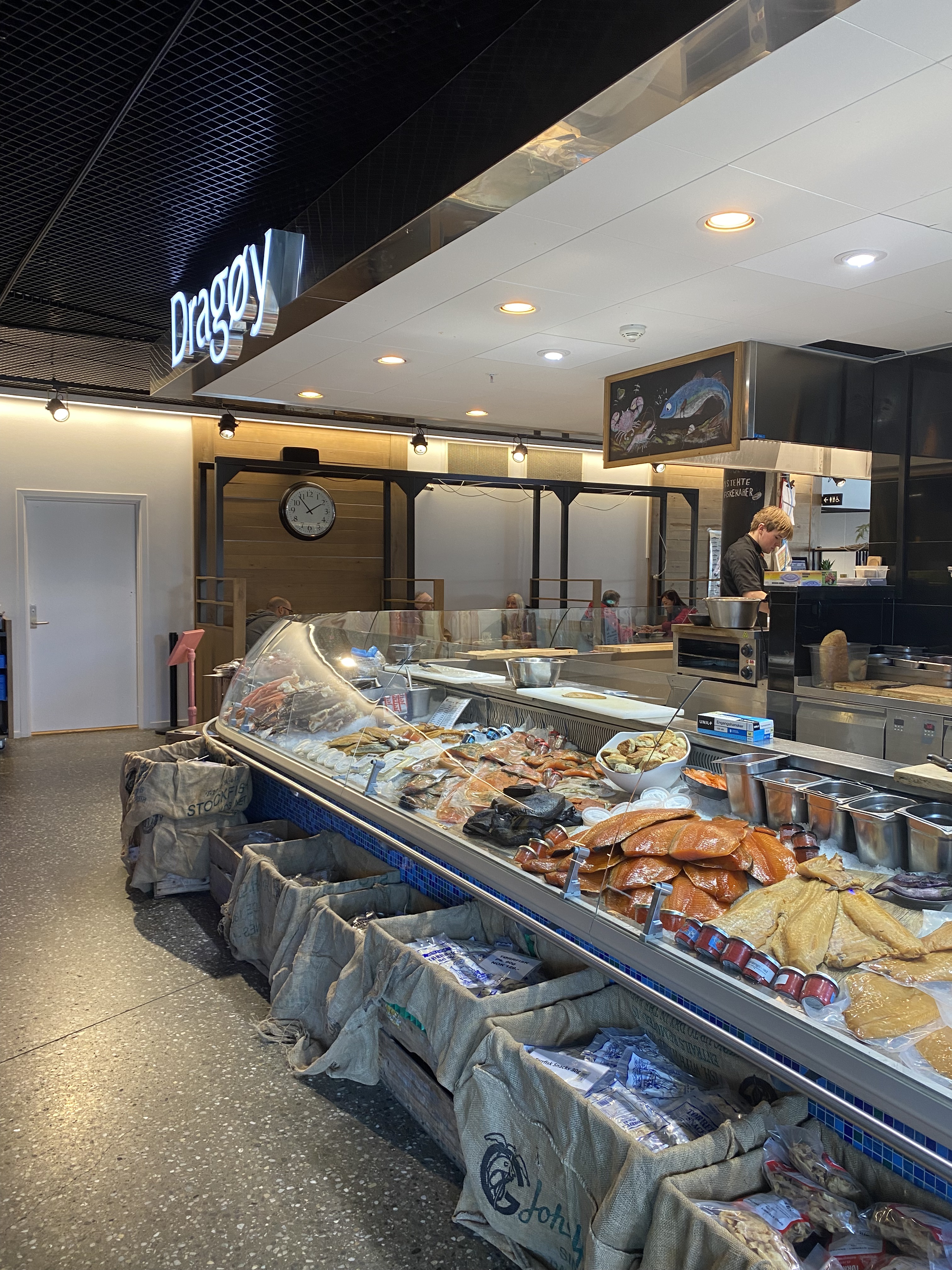
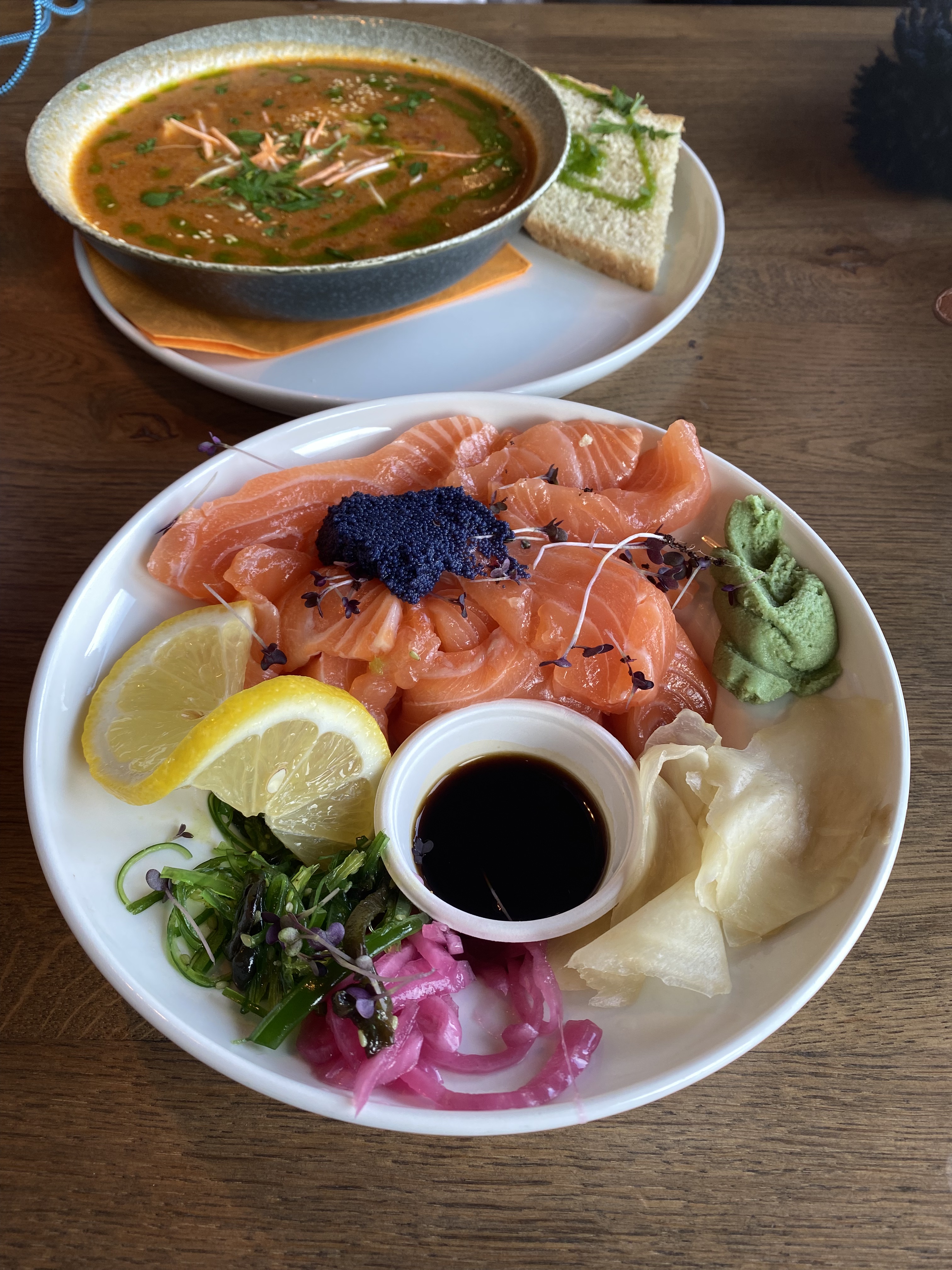
We met Kelly and Michael downstairs and decided our first stop would be Dragøy, a restaurant on the wharf known for its tasty dishes of freshly-caught fish. We were in luck; as we arrived, a table was clearing, so we were able to order two fish soups, salmon sashimi, and fish and chips. The fish in the soup was a variety, we were told, and the fish and chips was made with pollock, the same kind of fish that Dan had caught from our AirBnB in Bergen a few days earlier.
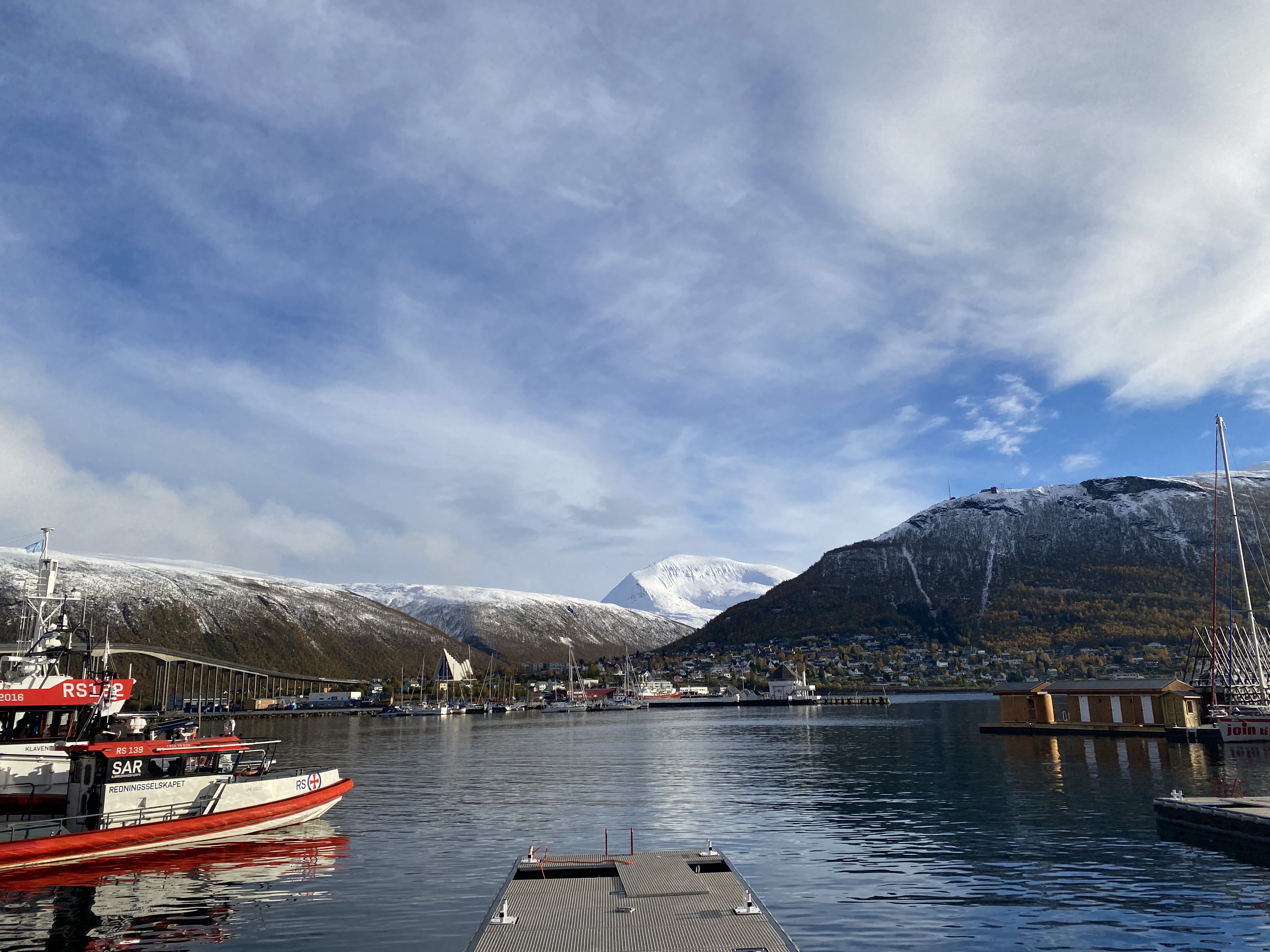
Our table was tucked against a floor-to-ceiling window overlooking the harbor. Somewhere between our bus stop and the city center, the rain had cleared and the sky was looking cloudless and blue. The sun shone on the world below, illuminating the fall colors on the mountains and revealing a completely snow-covered mountain we hadn’t noticed before. The brightly colored ships popped against the background. We watched as a woman in a bathing suit hauled herself out of the cold harbor water and onto a small floating dock, where a sauna bobbed on the water. Our waitress informed us that this was called Pust, and you could reserve a spot online.
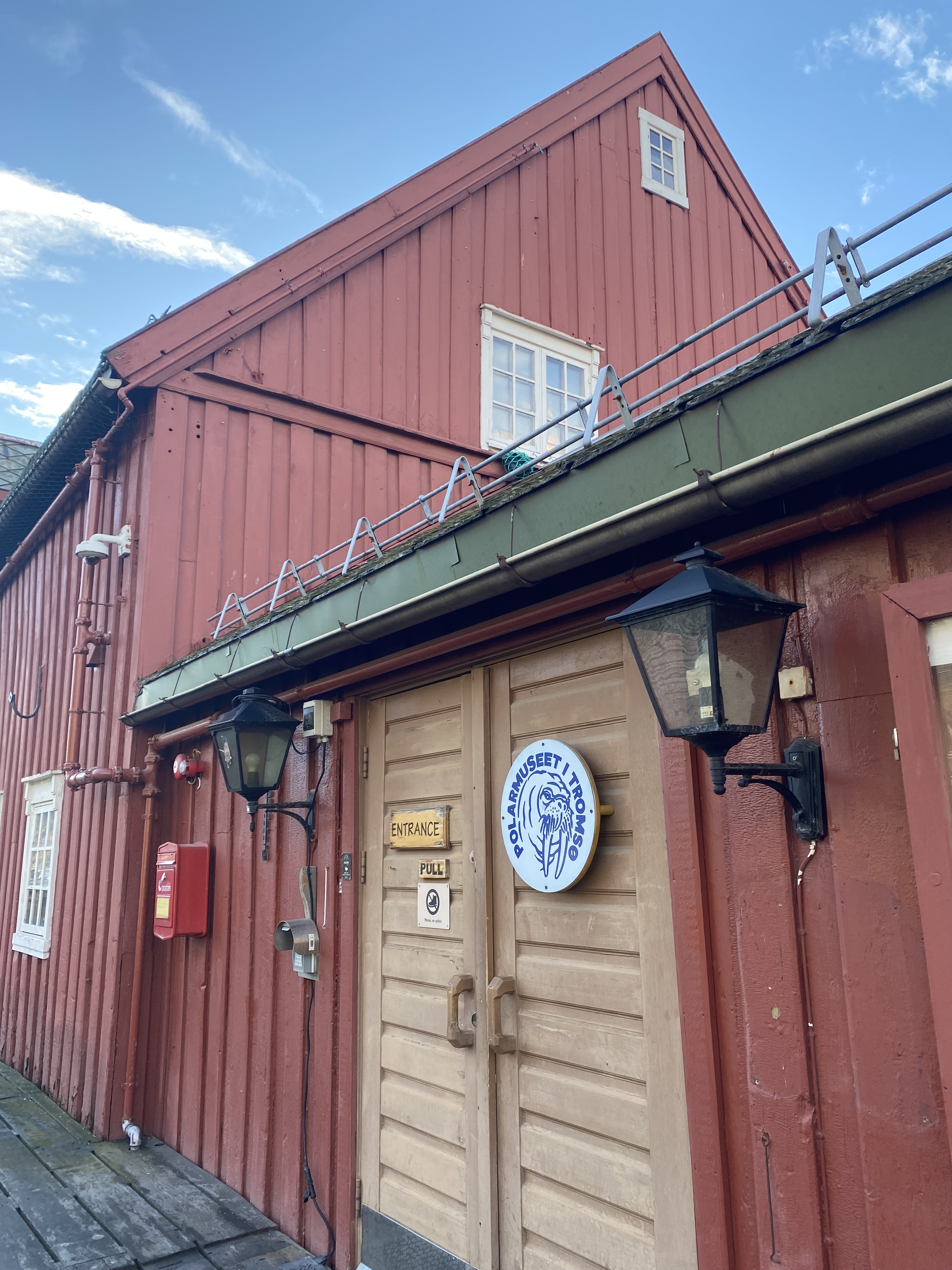
Perhaps we would, but our next stop was the Polar Museum, which we could see from the fish restaurant. For 110 Kronor per person ($10), we gained entry to a multi-story exhibit featuring information on Norway’s arctic expeditions in Svalbard, its contributions to the whaling and sealing industry, and its famous explorers, like Roald Amundsen. The website features a wide-eyed child musing at a stuffed seal, which looks adorable until you stand in that room yourself and observe the seal skin hanging just above the stuffed seal, alongside an information card about how three men would sail up to ice floes in small boats and one would jump off and club baby seals to death.
There was a feature on one man from Tromsø who, in his lifetime, killed precisely 712 polar bears. But the best part of the museum, by far, was the final room. It was a full floor devoted to the story of The Fram, which is a tale so wild and remarkable and inspiring that we all stood around in bafflement as to why this hasn’t been adapted into a novelisation or a Hollywood film or a ten-part HBO series.
In short, in the late 1890s, a man called Nansen had an idea about how to sail through the Arctic Circle: build a ship strong enough to withstand the pressure of pack ice and sail it up, let it get ensconced in pack ice, and then it will drift through the North Pole in its pack ice pocket. This may sound like a wacky but doomed escapade to you – it did to us – but it wasn’t!
They had someone construct an ice-resistant ship, and when the ice packed it in, they took parts of the ship down and turned the ship into a workshop where they could make anything – they had blacksmiths and carpenters, to name a few – but most impressively they had a windmill that served as a dynamo to provide electricity. This sounded wildly futuristic at a time when people were still slaughtering whales for lantern oil, so, wow.
As time went by – the crew of 13 had signed on for an undetermined amount of time, but one guestimate was a 5-year journey – Nansen realized that the pack ice would never drift them all the way through the pole like he wanted, so he decided to set off with his friend Johansen using sleds and kayaks and skis to try to reach the North Pole.
What happened next was that they made it quite far north – farther than anyone had yet been – but then knew they’d have to turn around if they wanted to survive due to bad weather impeding their progress. They were gone for about two years, and in that time, they went through most of their provisions, had to kill their sled dogs, built stone huts in the snow, kayaked from ice floe to ice floe, ate polar bears and seals to survive, and saved each other’s lives. One fell through the ice on his skis and was rescued by the other, which made them even since the other had shot a polar bear that was charging his friend earlier. No big deal.
They had to keep their old, dirty clothes on the entire two years because the clothes had stuck to their bodies with the blood from animals they’d killed. Eventually, they fashioned new ones out of wool blankets. When they were found two years later, still making their way south but encountering a group of British explorers, they’d actually gained weight.
I thought of my recent kayak escapade in Bergen, where I teetered into the water on a chill afternoon, and imagine I would barely have made it an hour if I was with them.
Equally remarkably, The Fram itself broke free of the pack ice and sailed back down to Tromsø. They did sail through part of the North Pole and gathered important scientific data, and everyone reunited in Norway. The end!
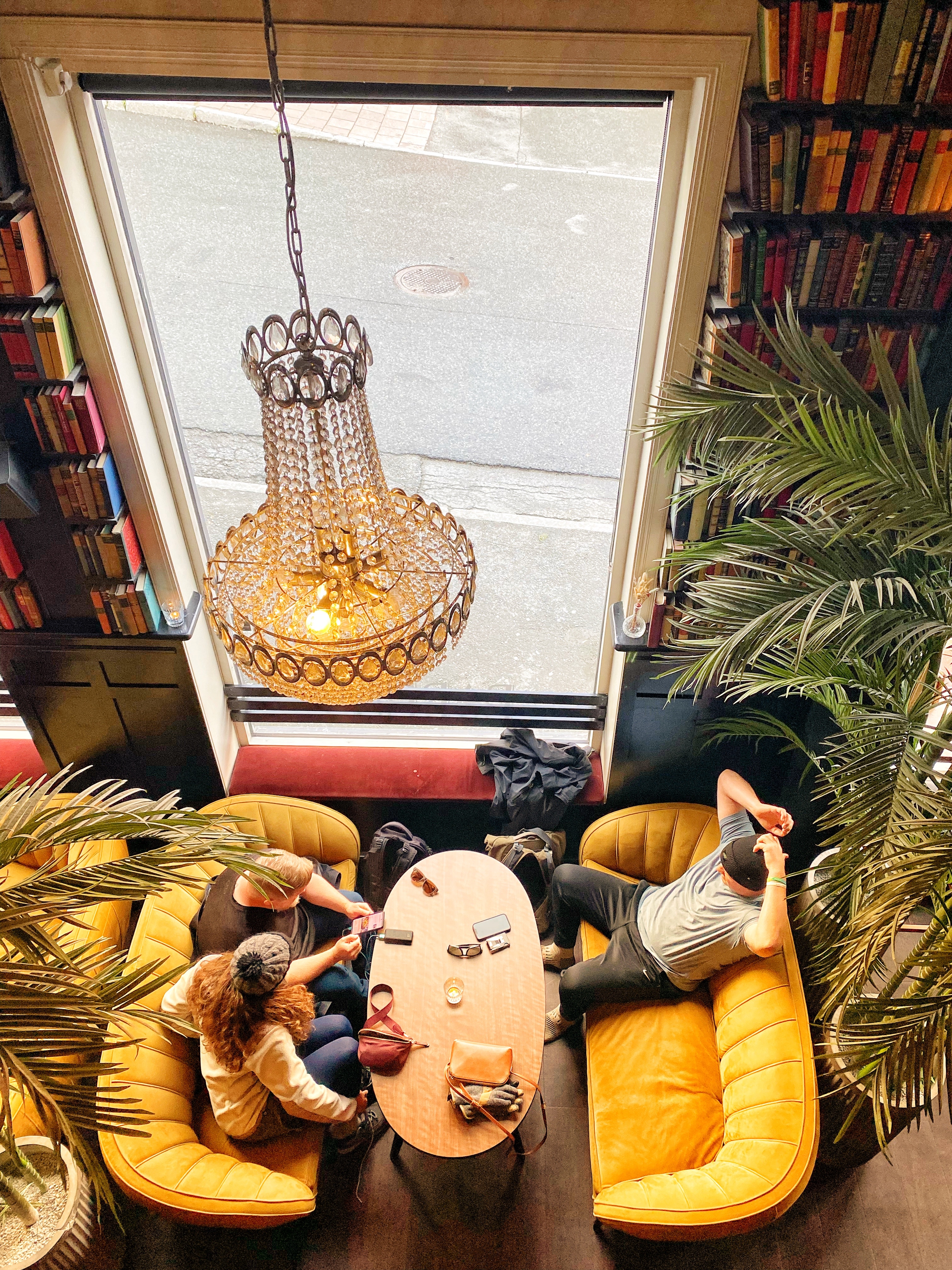
To celebrate this exciting endeavor, we decided to venture to a cocktail bar that Kelly found in the pages of a cookbook in the AirBnB. Someone had stuck the menu in as a placeholder, and Kelly spied a unique, arctic seaweed cocktail. Just a few minutes walk from the Polar Museum, Bardus was surprisingly empty, but its interior was cozy and plush. Dan and Michael ordered beers from a local brewery while Kelly and I opted for the famous seaweed cocktail.
After some inquiring, we learned from our waitress that the cocktail mixed together Arctic Gin and a seaweed liqueur, both from the Aurora Spirit distillery, though the Bardus Seaweed liqueur was only available there, in Bardus, in Tromsø.
“You can’t get it anywhere else,” she told us. “The owner of this place requests it specifically for this restaurant. He actually dives for the seaweed used in the liqueur.”
This was mindblowing to us, and while she wouldn’t sell us a bottle, she did pour us a little taster of the seaweed liqueur. It tasted unlike anything we’d had before, with a briny, seaweed punch but a smooth finish.
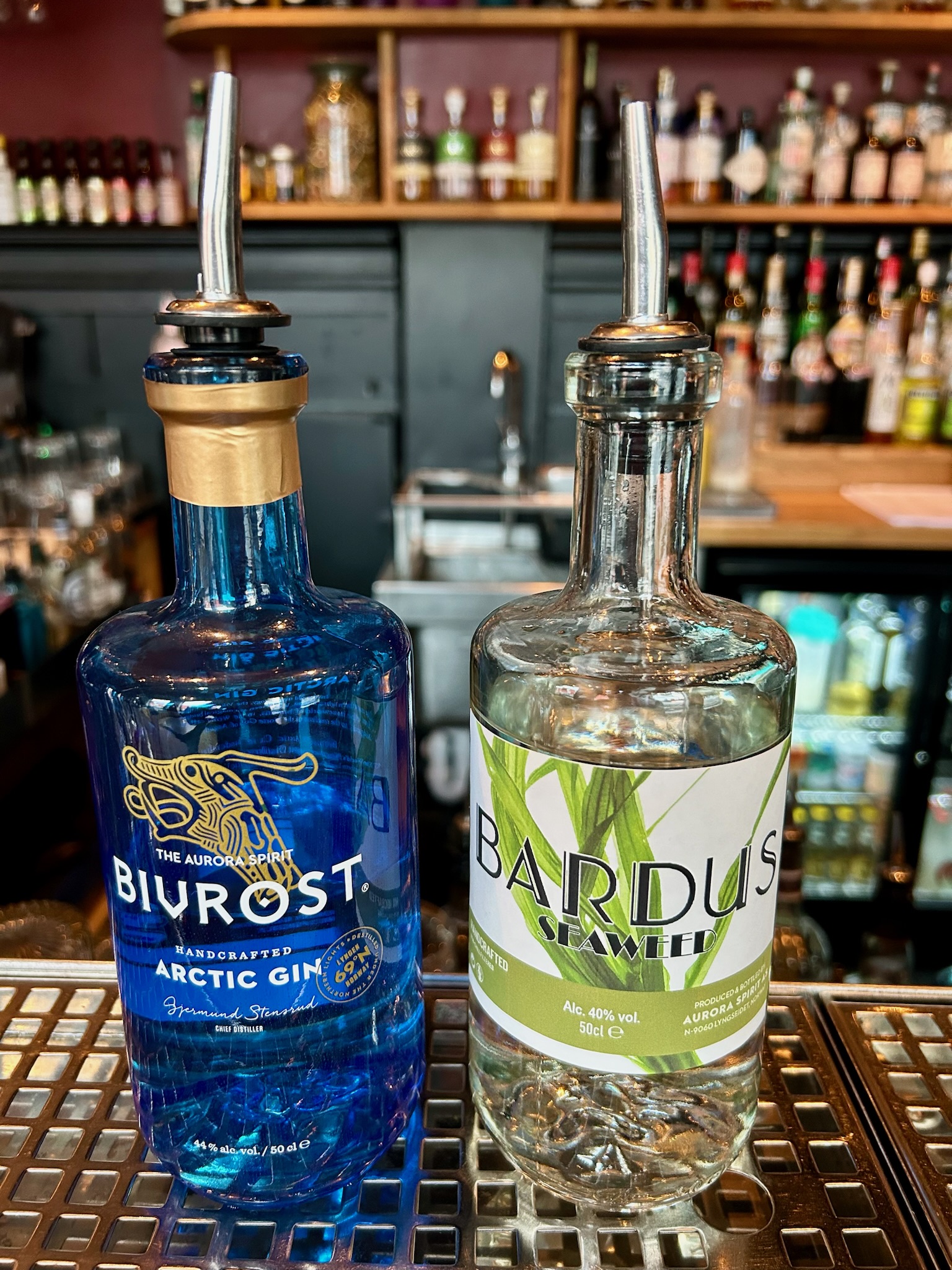
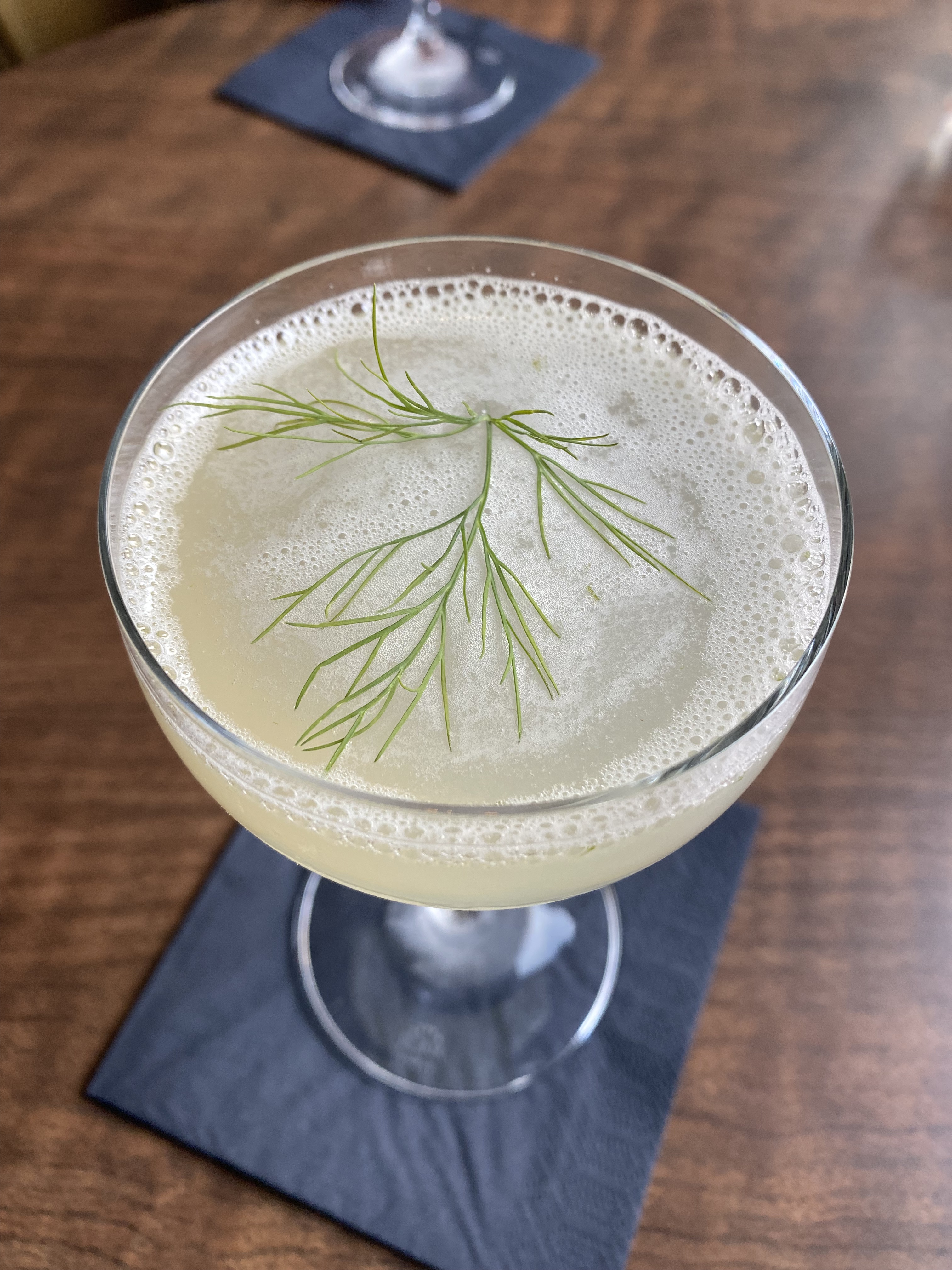
The cocktail itself was also delicious, the two spirits mixed with lemon, honey, and dill. It was delicious and vegetal and refreshing, and the perfect energizer to get us even further down the road to the Mack brewery and its attached barroom, Ølhallen.
Known as the northernmost brewery in the world (although there seems to be one in Svalbard, too), Ølhallen offers a wide variety of beers on tap and a cool, basement hangout space with board games. We enjoyed a few beers there while Michael took some more work calls (he did not lose his phone this time).

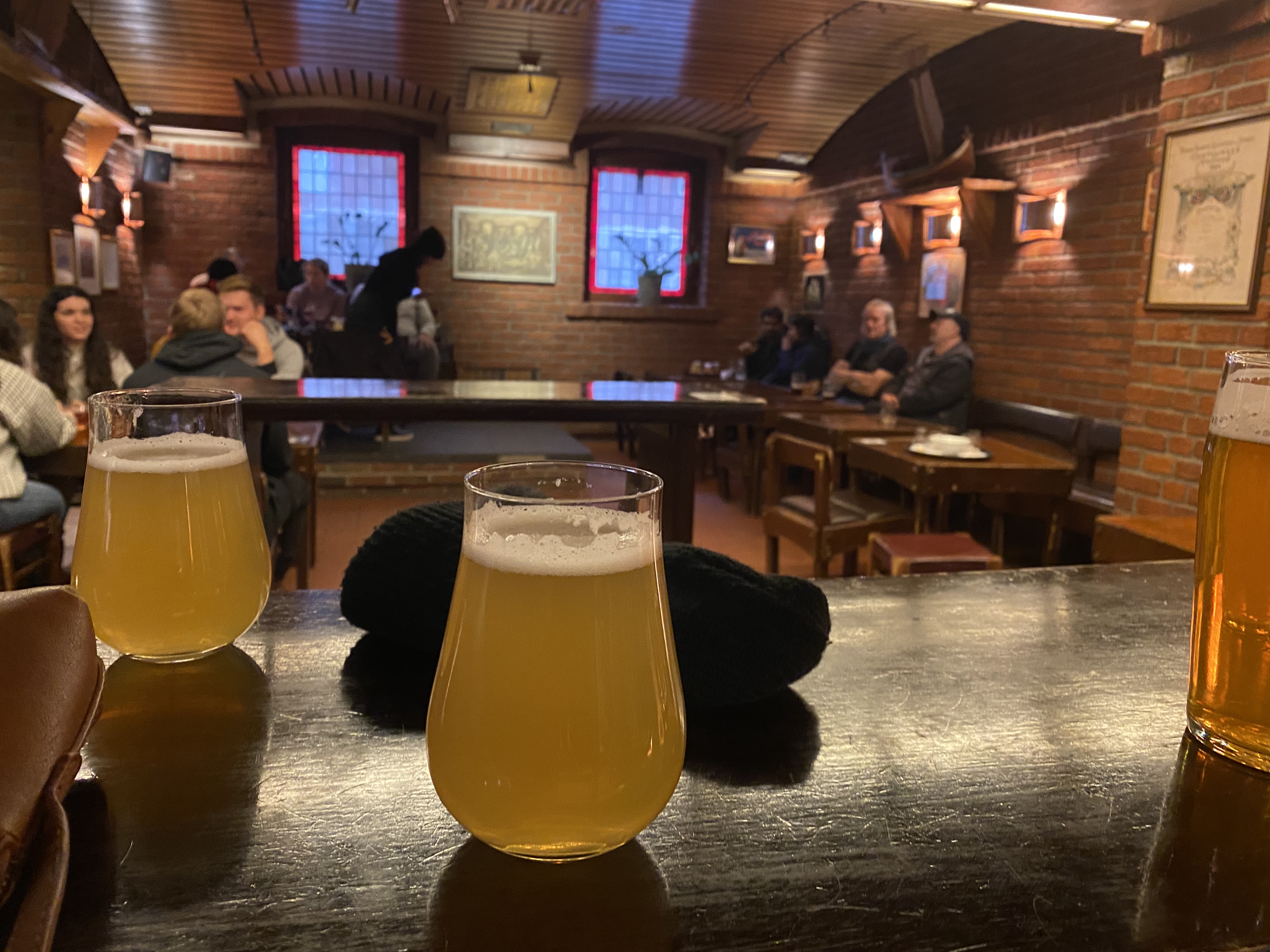
In search of food, we asked the bartender at Ølhallen, who recommended Graffi Grill on the harbor. I called and made a reservation – “Hmm…we only have a high-top at the bar” was the hesitant reply – and we braved the increasingly cold temperatures. We were rewarded by a candlelit dining room and some delicious fare – a mix of meat and veggie options – before grabbing our bus back to our AirBnB.
Michael started a fire in the indoor fireplace and we relaxed in the warmth while popping out onto the balcony to search for the Northern Lights. A little before 11pm, feeling a little hot, I stepped outside and peered out over the harbor. A small green smudge appeared in the sky. I called the others outside and we squinted at it, using our phone cameras to distinguish the green from the clouds. As we stood there, the green stretched out and became a nice, fuzzy band of northern lights. While it was a little cloudy, it was still a nice show, and the perfect end to a pretty perfect first full day in Tromsø.

Categories: Norway
 Lost Among Latitudes