Greenland is simultaneously a place I’ve wanted to visit for years and a place that seemed impossible to visit. Not only is it difficult to get to (or was – more in a minute), but it’s expensive. Both polar regions are notoriously pricey to get to unless you’re a climate scientist or glaciologist or intrepid wooden ship sailor clad in sealskins from the late 1800s.
Only after I’d booked my tickets did I discover that United Airlines flies direct between Newark and Nuuk as of June 2025. Which is also the exact month and year that Ilulissat’s UNESCO hiking trails began charging non-Greenlanders for access. Good for them.
I didn’t know about the Newark-Nuuk flight when I booked my trip. Besides, a former student of mine recommended I go to Ilulissat instead of Nuuk. Given she’s an awesome human, I took her advice. If she’d suggested I get helicoptered to the very middle of Greenland’s 2900 km internal ice sheet, I’d probably consider it.
Booking flights back to NJ via Ilulissat was like untangling a necklace chain. Which airport would I fly into and when? Which flights were least expensive? (That Newark Nuuk direct flight is 4 hours 25 minutes and 1200 USD.) Which airports would hop me closer to NJ?
In the end, I booked via IcelandAir because of their famous stopover and because the cost of Zurich to Newark was affordable. Then I’d fly Keflavik to Ilulissat from July 3-8, then back to Reykjavik, then NJ. Hops, skips, jumps and all that.
Sitting in Keflavik Airport in the wee morning hours of July 3, I tapped on my app to learn more about the airplane that would be carrying me across the Denmark Strait.
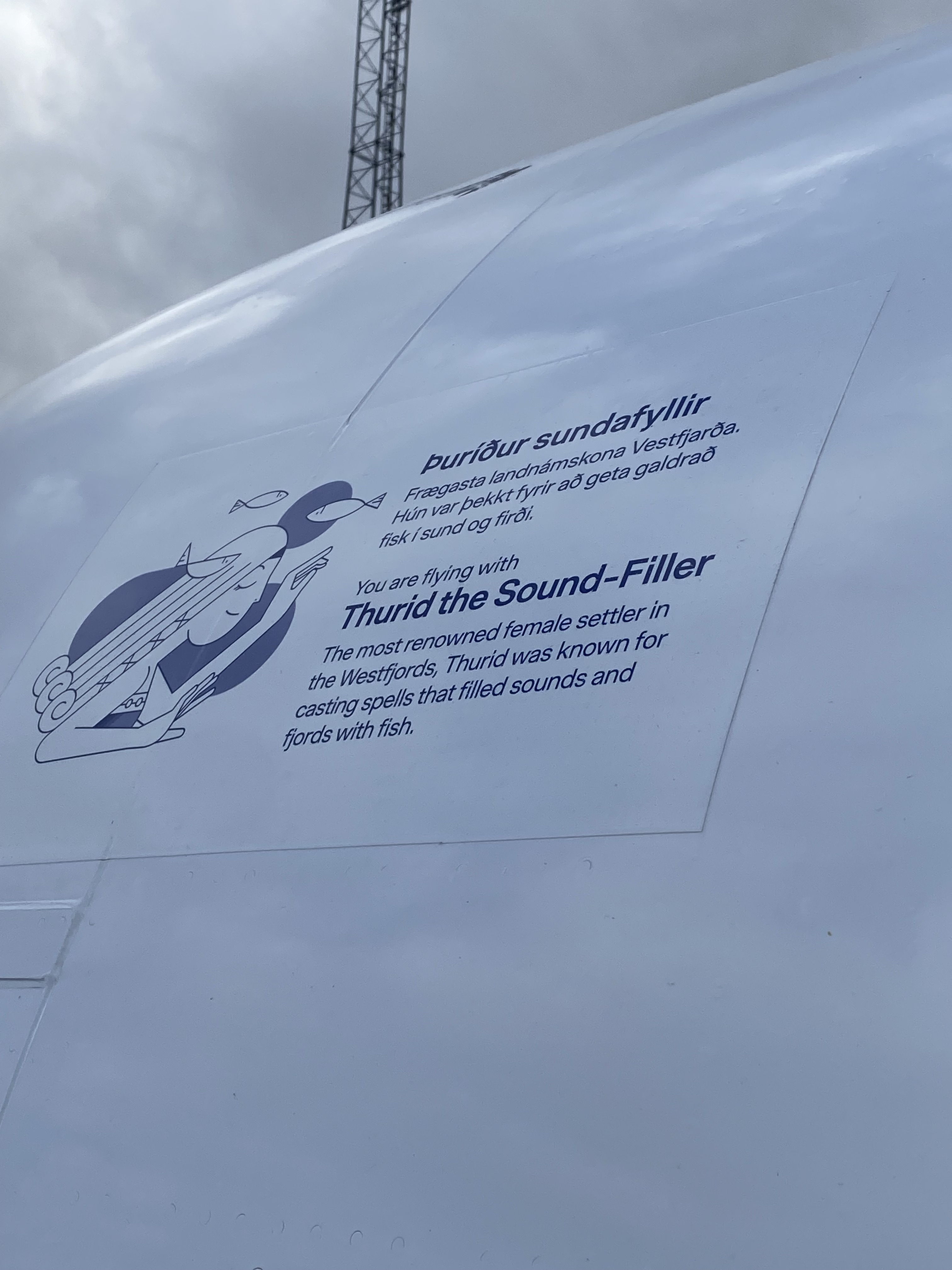
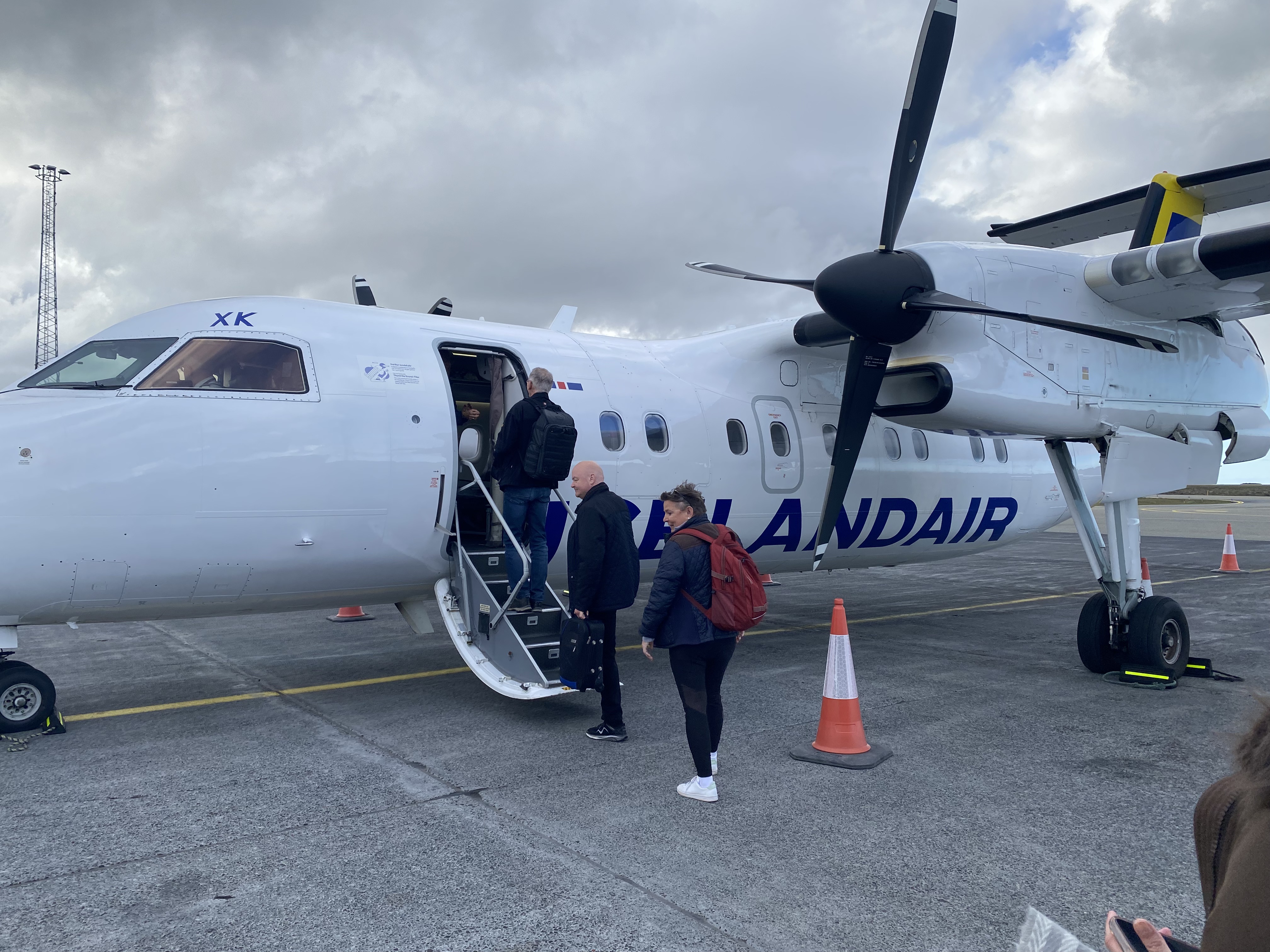
IcelandAir’s DHC-8-200 (DHC is short for De Havilland Canada) is a propellor plane that carries up to 37 passengers. IcelandAir has named their fleet of these planes – which, according to their website, include 3 in total – after “female settlers and Icelandic saga heroines.” The plane I was shuttled to along with maybe 28 other passengers was called Þuríður sundafyllir, or Thurid the Sound-Filler. Cool, I thought. A musician.
But, no. Sound meant, like, body of water sound, which was also cool. She’s supposedly magical and settled in the Westfjords, using her magic to fill the sound with herring. Now she would lend her magic to a small plane filling Ilulissat with tourists.
We had one flight attendant on the plane, and when we took off, he offered beverage service out of a reusable plastic tote bag filled with paper cups and metal carafes of coffee and tea.
I popped on my noise-cancelling headphones – I was sitting in row 2, beside the props – and settled in as we hit cruising altitude of somewhere between 20,000 – 25,000 feet. That’s as high as these planes go, and man, it was perfect.
Because unlike long-haul flights which offer zero form of entertainment apart from your seatback, this little plane was like a flying train; there was much to see out of the windows! After about an hour, the water below suddenly became speckled with ice. And then, just as suddenly, there was land beneath us! Greenland’s eastern coast jutted out against the water, snowy and studded with occasional mountain peaks.
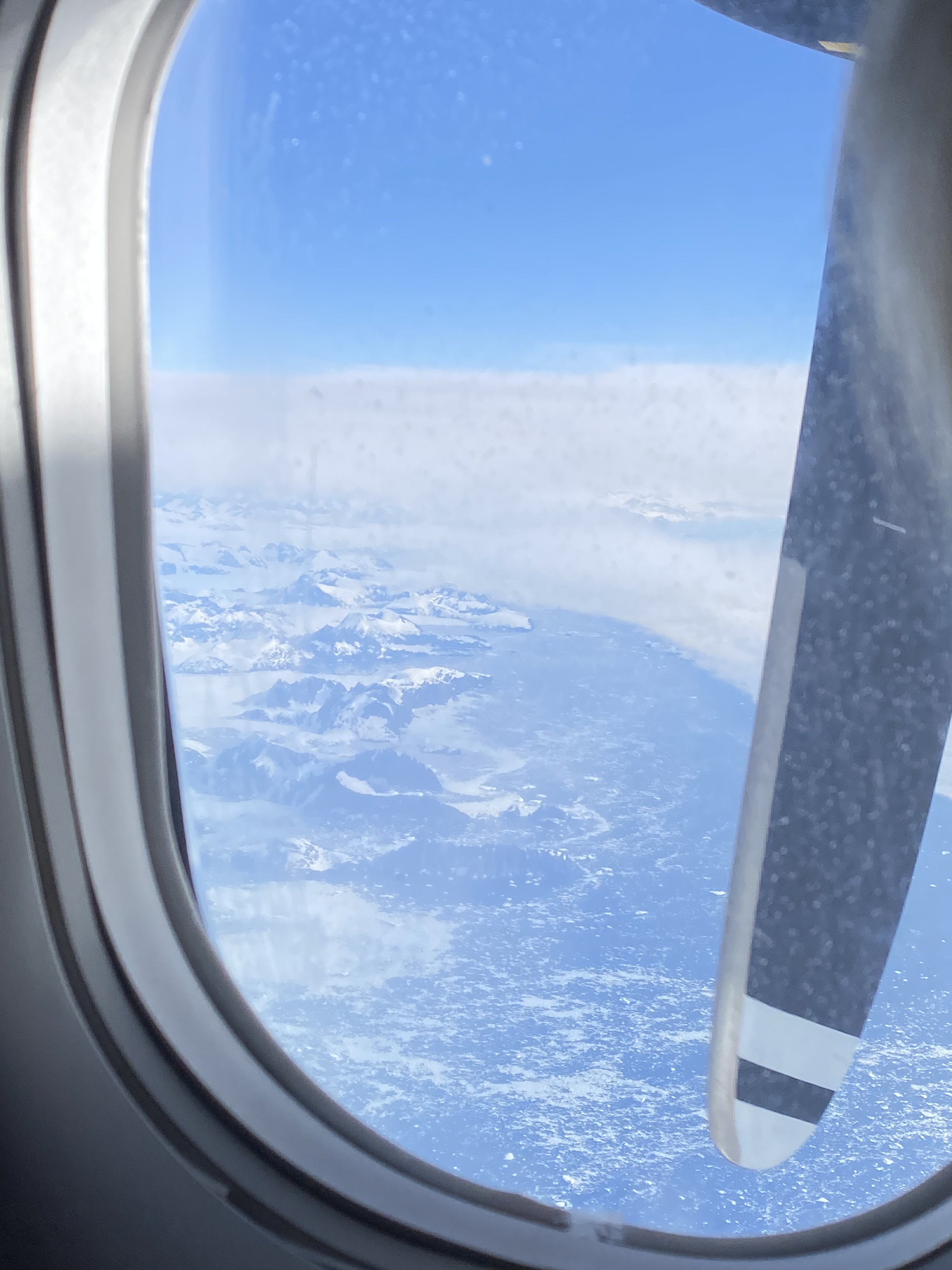
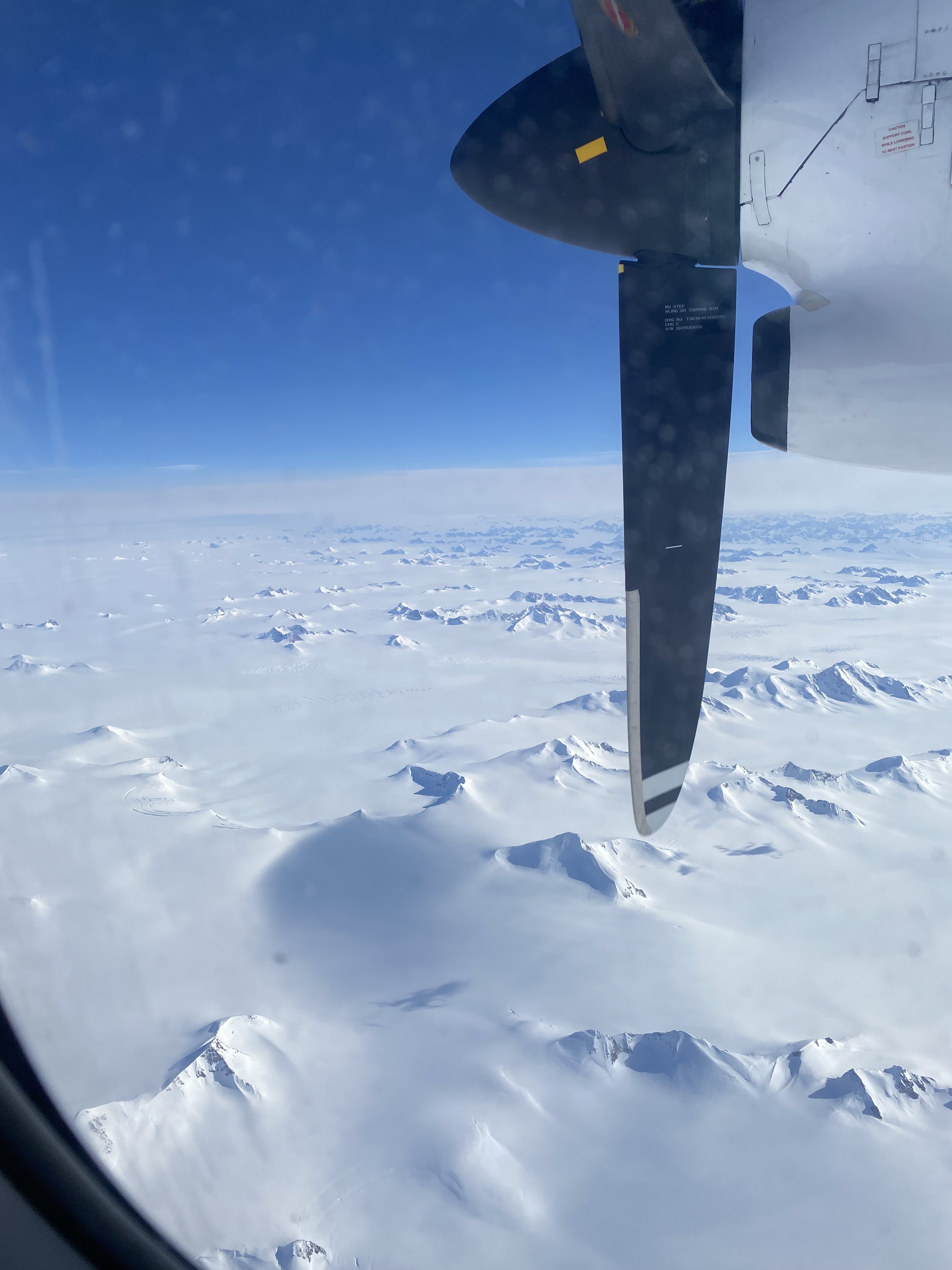
A German woman sat in the window seat beside me and kindly offered to take photos with my phone, probably so I would stop saying, “Entschuldigung” as I leaned over to take my thirtieth blurry video.
“We’re very lucky,” she told me. “Usually, you can’t see anything. Once, my friend was flying from the US to Iceland and the pilot woke everybody up and told them to look out the window. Usually you can’t see Greenland because it’s so cloudy.”
I remembered glimpsing icebergs from the bathroom window of a flight from Toronto to Hong Kong about a decade ago. This view, 25,000 feet above the island, was much better.
We landed in Ilulissat and deplaned. There were no other planes parked there. Someone set up a traffic cone-caution tape walkway that guided us to the one door into the airport. Inside, a small baggage carousel sat unmoving. A cluster of people waited inside the building, probably to board our plane back to Reykjavik.
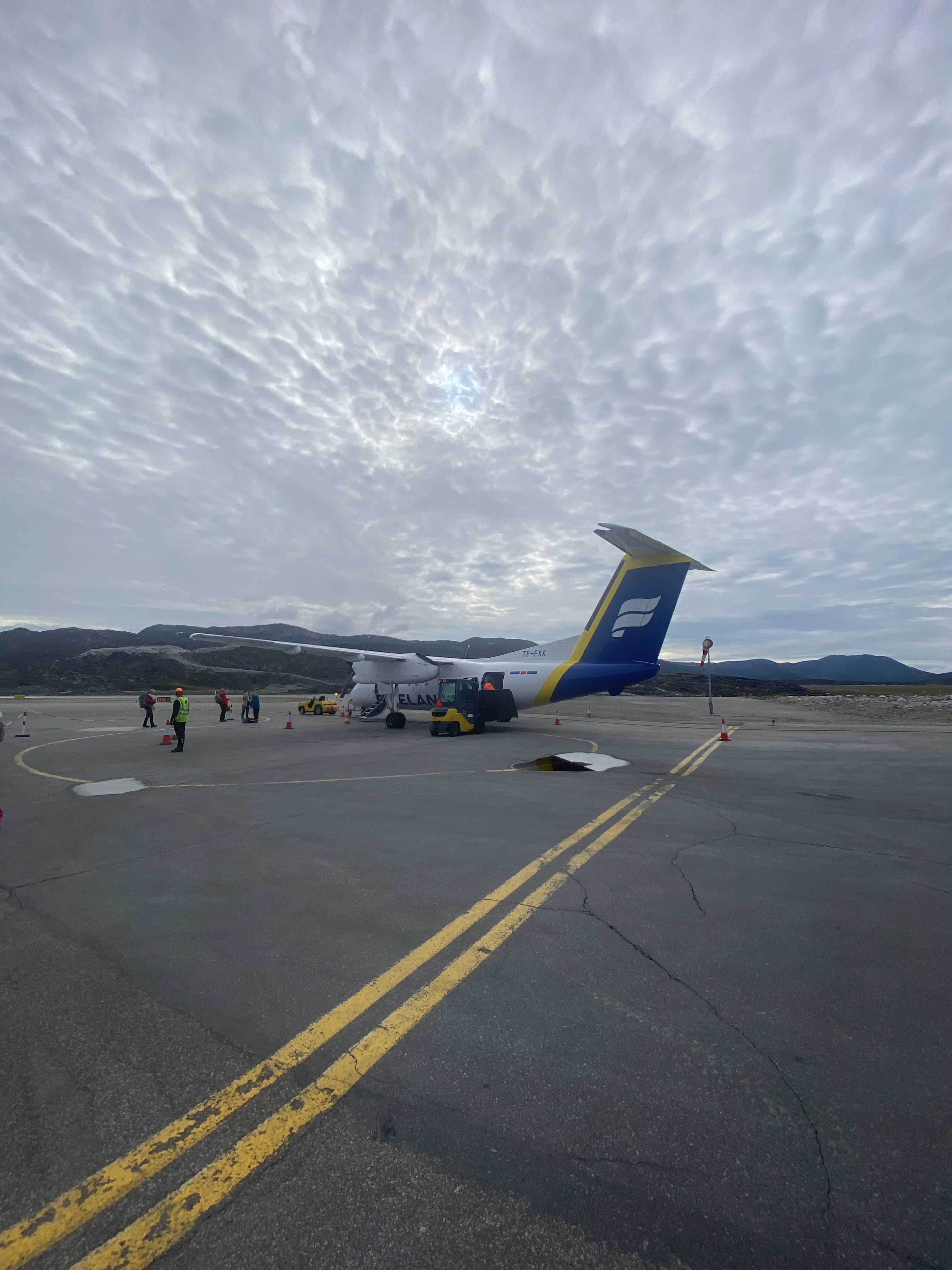
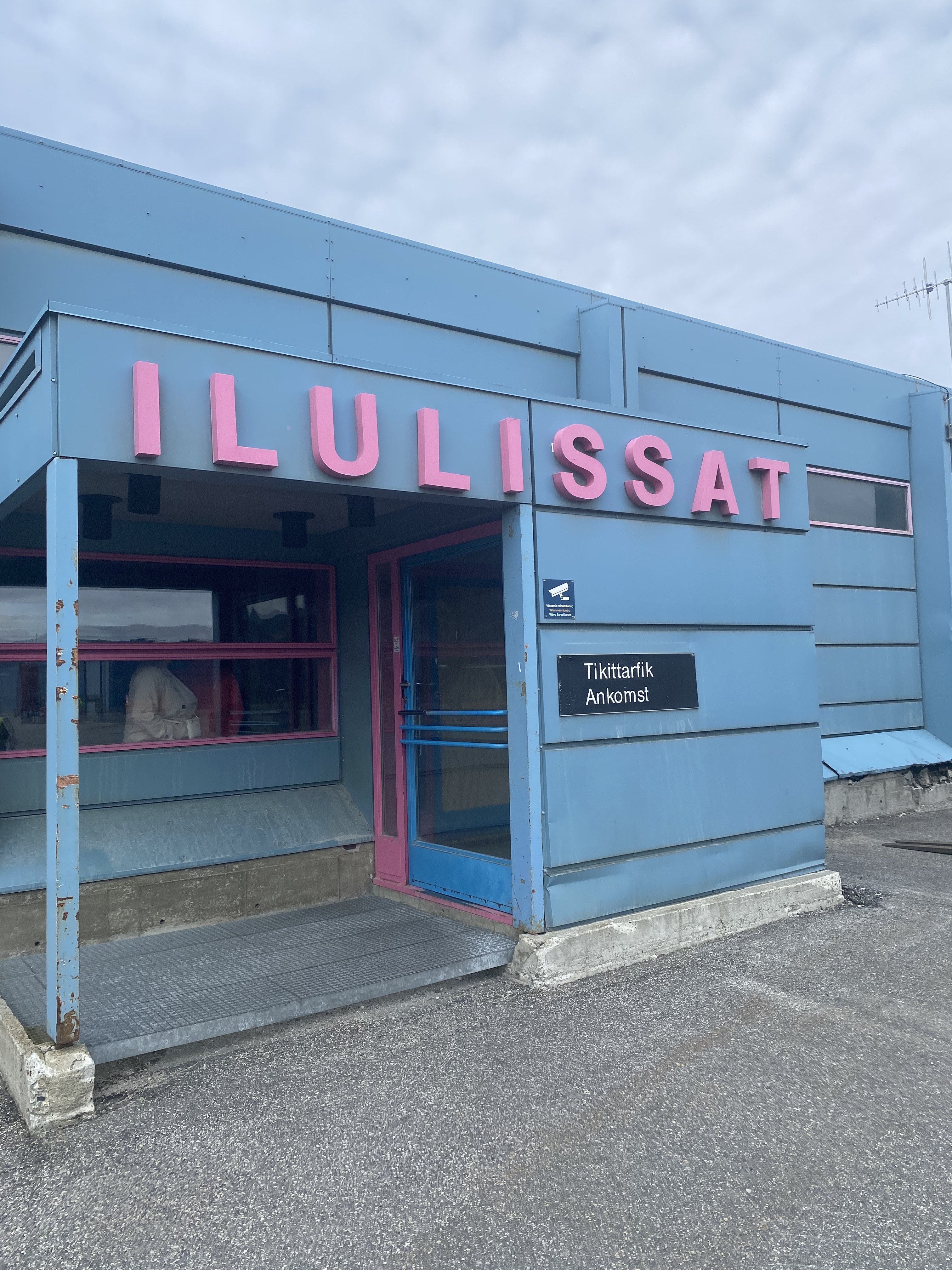
My bag came out and I made my way to the entrance of the airport to await the shuttle to Hotel Arctic. The moment I stepped outside, I was greeted by a cloud of mosquitos. When was the last time I saw this many mosquitos?
I remembered Laura’s stories of mosquitos in Alaska, how her friend had slapped her thigh one summer and counted 95 mosquito corpses. Maybe this is cold tundra life.
The shuttle arrived before I had my face eaten by bugs, and we followed the road down some rocky hills to the barn-red Hotel Arctic. The hotel sits outside of the town and has a patio overlooking the floating icebergs of Disko Bay.
Both Patrick and a polar explorer named Paul spoke highly of Hotel Arctic.
“It’s the place to be,” Paul told me, before adding, “And if you’re there, make sure to check out the dump!”
Paul had been stationed in Greenland during an expedition years ago. Whenever they had to build something or fix broken machinery, he’d take his team to the dump and they’d see what metals they could find there.
“You can’t just get steel delivered to Greenland,” he told me.
He also mentioned that when whales were killed illegally (I think?) their bodies were brought to the dump. Then, you could go there and join the locals in eating the whale.
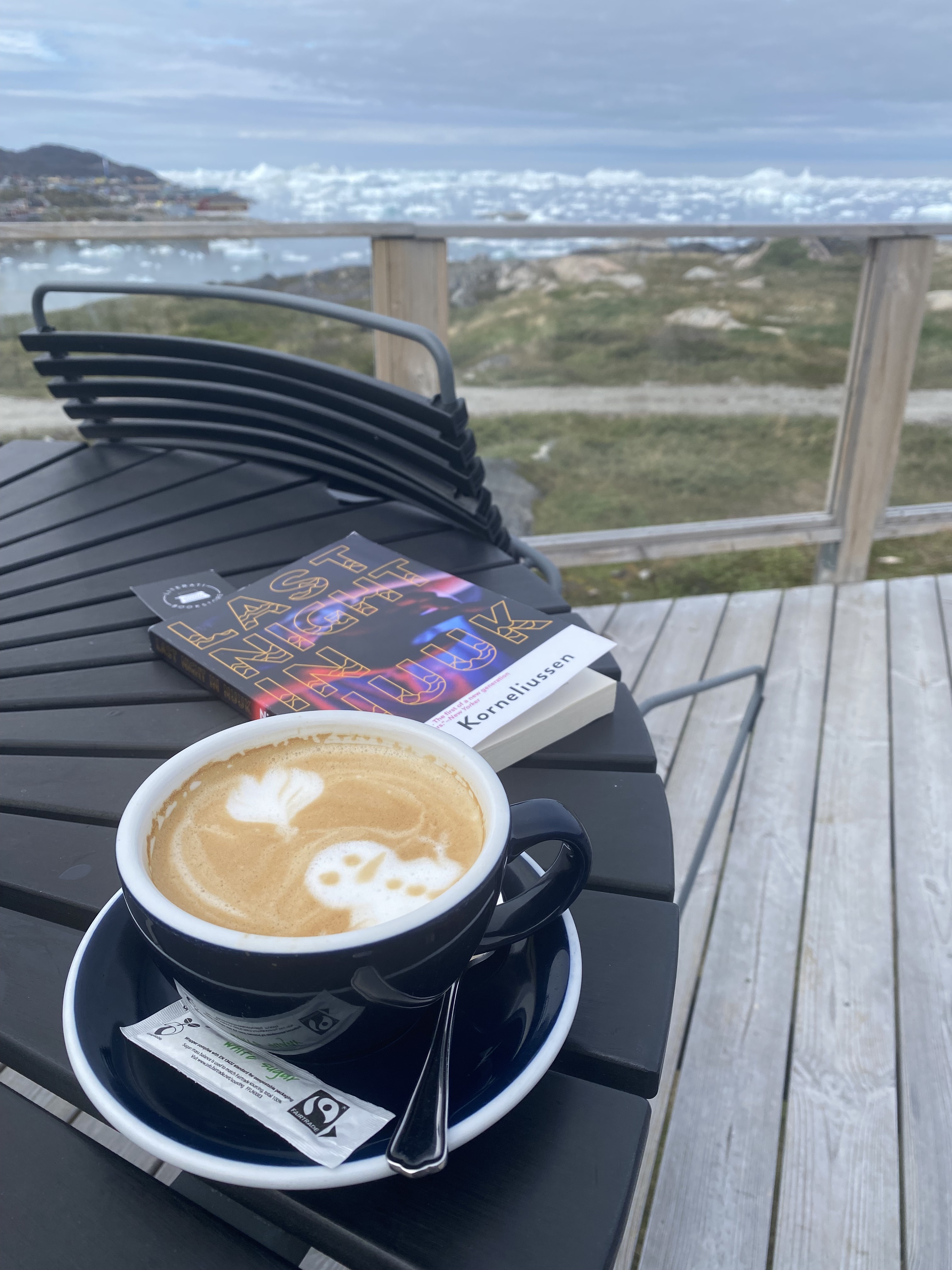
I decided to drop my luggage at the hotel before adventuring to the dump. I couldn’t check in until 3pm and it was only 11am, so I ordered a cappuccino and took it out on the deck to watch the ice floes. What was this place? I was in love.
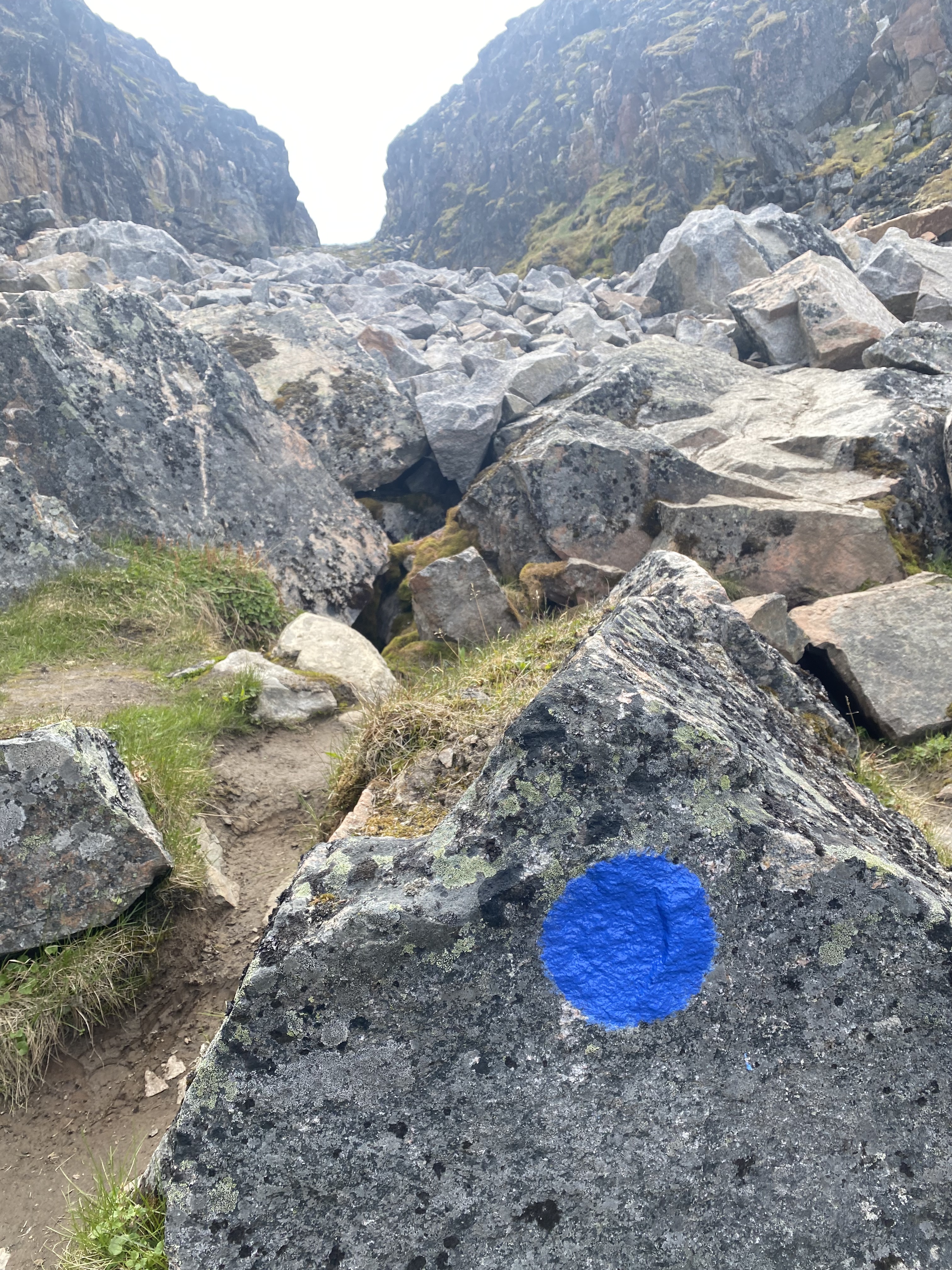
One of the restaurant staff, a young guy from Denmark who works here seasonally, told me about the different hiking trails in the area. I’d read about them briefly on the internet. Each one is easy to follow and well-marked with either yellow, red, or blue blazes. The blue trail sounded like the prettiest.
“You should do it backwards,” the man advised me. “Start in the quarry and run back toward the Icefjord Center. You get better views this way.”
He marked the spot on my phone map. With a few hours before check-in, I figured, why not? I dug my running clothes out of my suitcase, changed in the bathroom, filled my water bladder, and headed out.
It was about 3 kilometers from the hotel to the starting point. Ilulissat’s streets are sidewalk-free, with a shoulder of sand that people can walk in or, on occasion, little boardwalks or metal grates that allow you to safely cross bridges without being run off the road.
The back entrance to the blue trail was marked with a sign. A woman stood at the sign and said, “I’m going to do this hike tomorrow, so I’m just having a look.”
“Ah,” I said. “A little recon.”
“What?”
“You know, checking it out. Anyway. Enjoy!”
“You too! Watch out for polar bears!” she called after me as I ran onward. I shot her a terrified look over my shoulder and she called back, “Just kidding! There aren’t any polar bears!”
While there were not any polar bears, there were quite a lot of sled dogs. The quarry seemed to double as dump (I snapped a selfie in front of a metal cargo shed with a pickup truck parked on top) and a living area for dozens upon dozens of howling, crying sled dogs. Most were chained to their little houses and either napping or stretching or eyeing me warily. Two puppies nuzzled on a hill. I immediately wanted to go over and pet the puppies, but instinct stopped me. Surely you can’t just walk around petting the sled dogs.
Instead, I followed blue blazes through the quarry and, eventually, out of sled dog territory and into a sort of valley that stretched between two large rock faces. My feet sank into squelching mud or hopped over rocks and boulders. Once the sights of the town were well behind me, it was like total wilderness. No planes flying overhead, no distant highways.
No people.
I ran-clambered-skipped-sprinted-squelched through the landscape until the rock path curved upward and I found myself cresting a hill where a couple sat eating lunch overlooking a rippling lake. I was beside myself with how beautiful this view was.
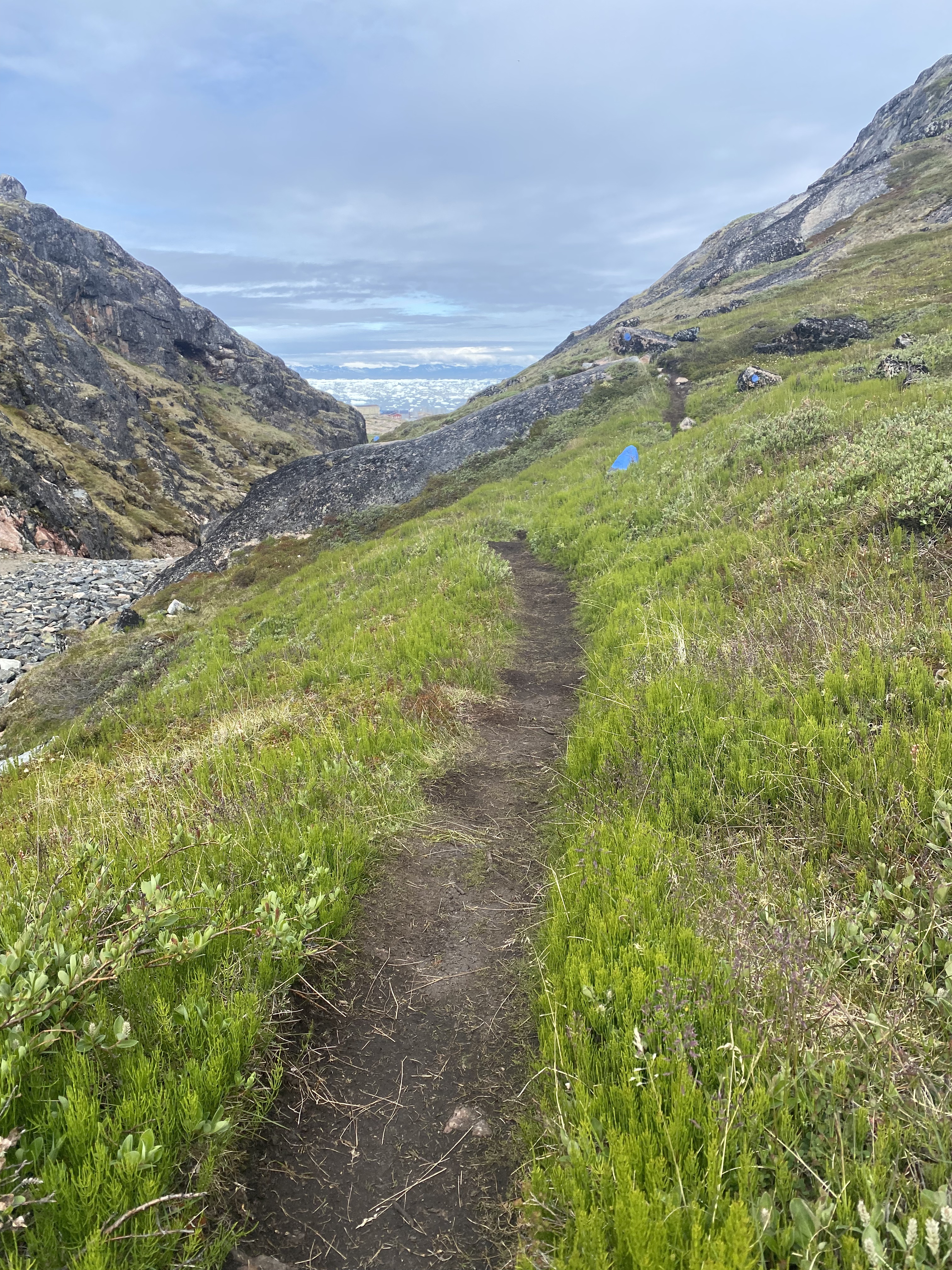
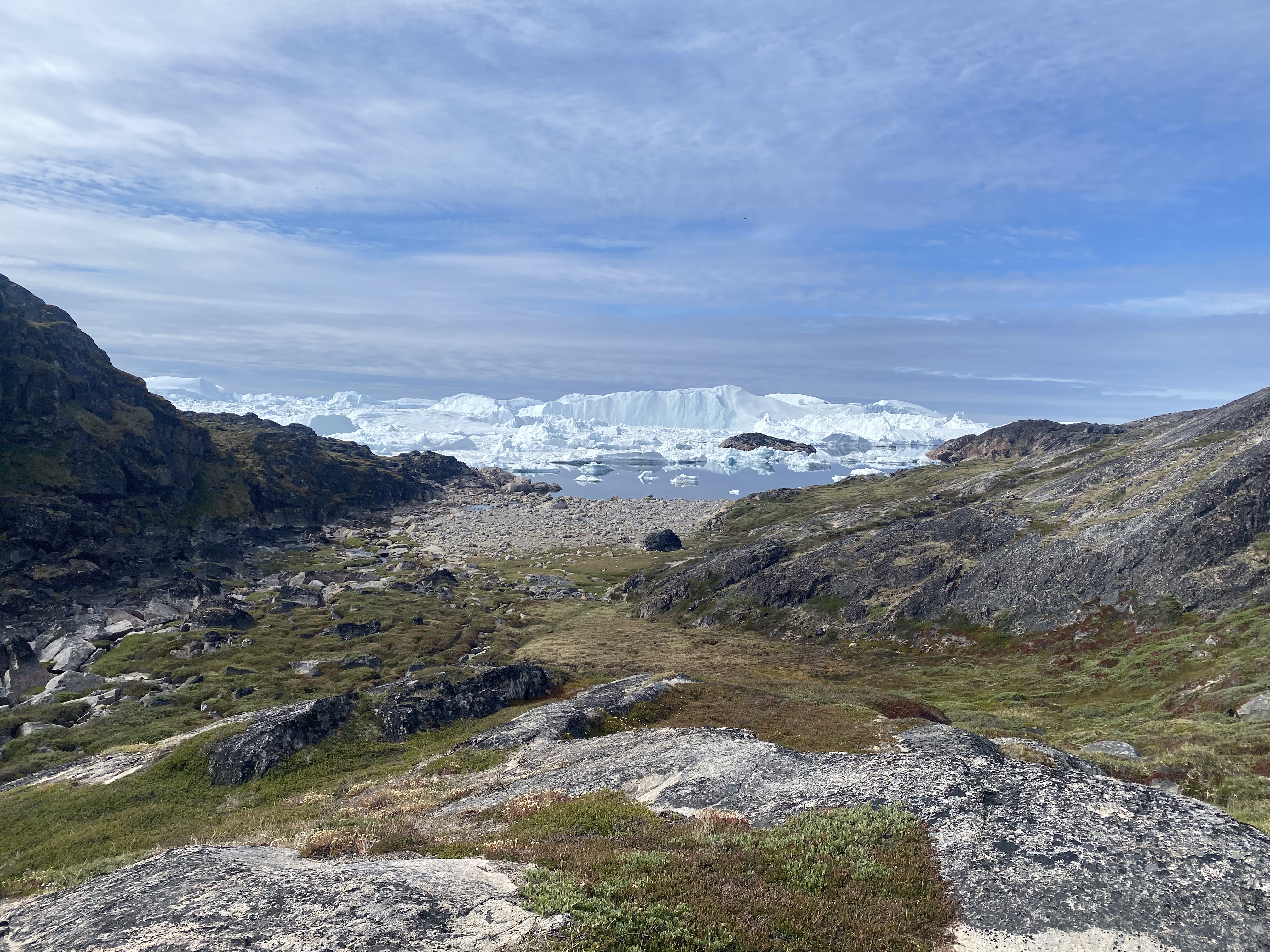
I continued down the next hill, through another little gorge, and then, in the distance, I saw them. The little floating icebergs in the bay.
By this point, my phone battery was dying a rapid death. I’d begun the run at 18% and now it was below 10%. But I couldn’t help it. I had to photograph everything. That rock, this river, the tip of the iceberg in the distance. I had never been on a run this wild and gorgeous before.
Eventually, the path became more flat grass and rocks, and I began passing more people walking. They all wore mosquito nets draped over their heads. I only noticed the bugs when I stopped to take a picture, but everyone I met who had done a hike mentioned that they were insufferable.
“I had to keep my mouth closed at one point,” Alexandra, a girl from Norway I met later, told me. She’d been hiking with her 86-year-old grandmother around the same time I’d done my run, only on the yellow trail.
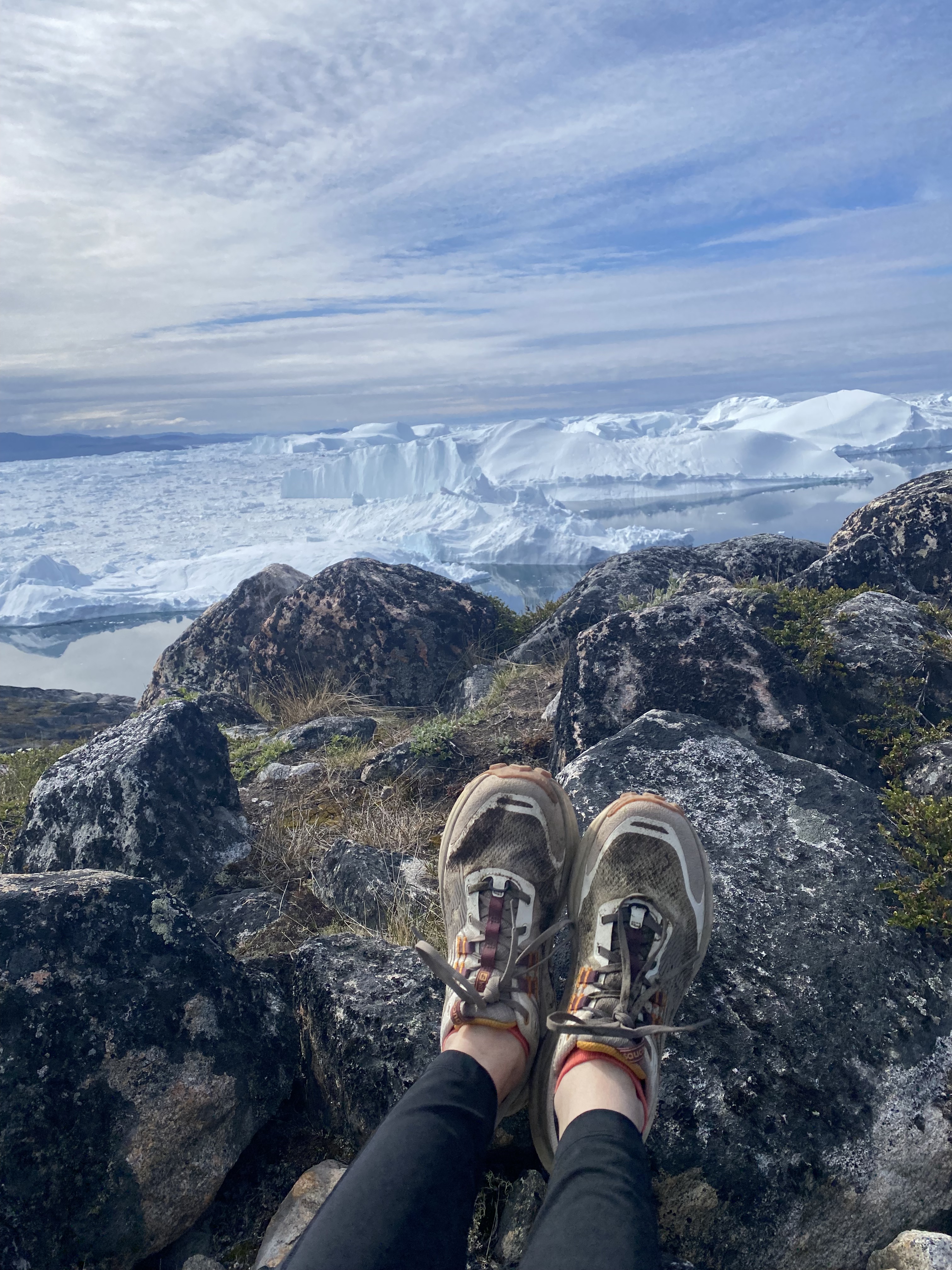
I crested this one peak that had a set of binoculars at the top and a view of the bay that was absolutely breathtaking. My phone was fully dead by this point, so I beheld with my eyes only.
The run ended with a long boardwalk behind the Icefjord Center. I later learned that the boardwalk runs through the ruins of an old Sermermiut settlement and is part of a UNESCO heritage site. All along the boardwalk were warning signs: Danger! Do not leave boardwalk! Calving glaciers or icebergs can cause unpredictable tsunami waves.
I learned later at the actual Icefjord museum that the boardwalk had been built somewhat recently in order to preserve the site of the old settlement. When people wandered around the area freely, they were damaging the land and possibly interacting with old stone tools and artefacts. The boardwalk helped preserve the grassy land, and since its construction, the grass and flora have regrown.
I emerged at the Icefjord Center and made my way back to Hotel Arctic. In all, I ran 13.3 km with 99m of elevation gain in about 2.5 hours (with many stops to take photos). A sign outside the Icefjord Center labels the hike at 6.9km. If you’re ever in Ilulissat, I highly recommend it! If you prefer less technical trails, the yellow trail is 2.7km and labeled ‘relatively easy’ and the red trail is 1km each way and labeled ‘relatively easy’ as well.
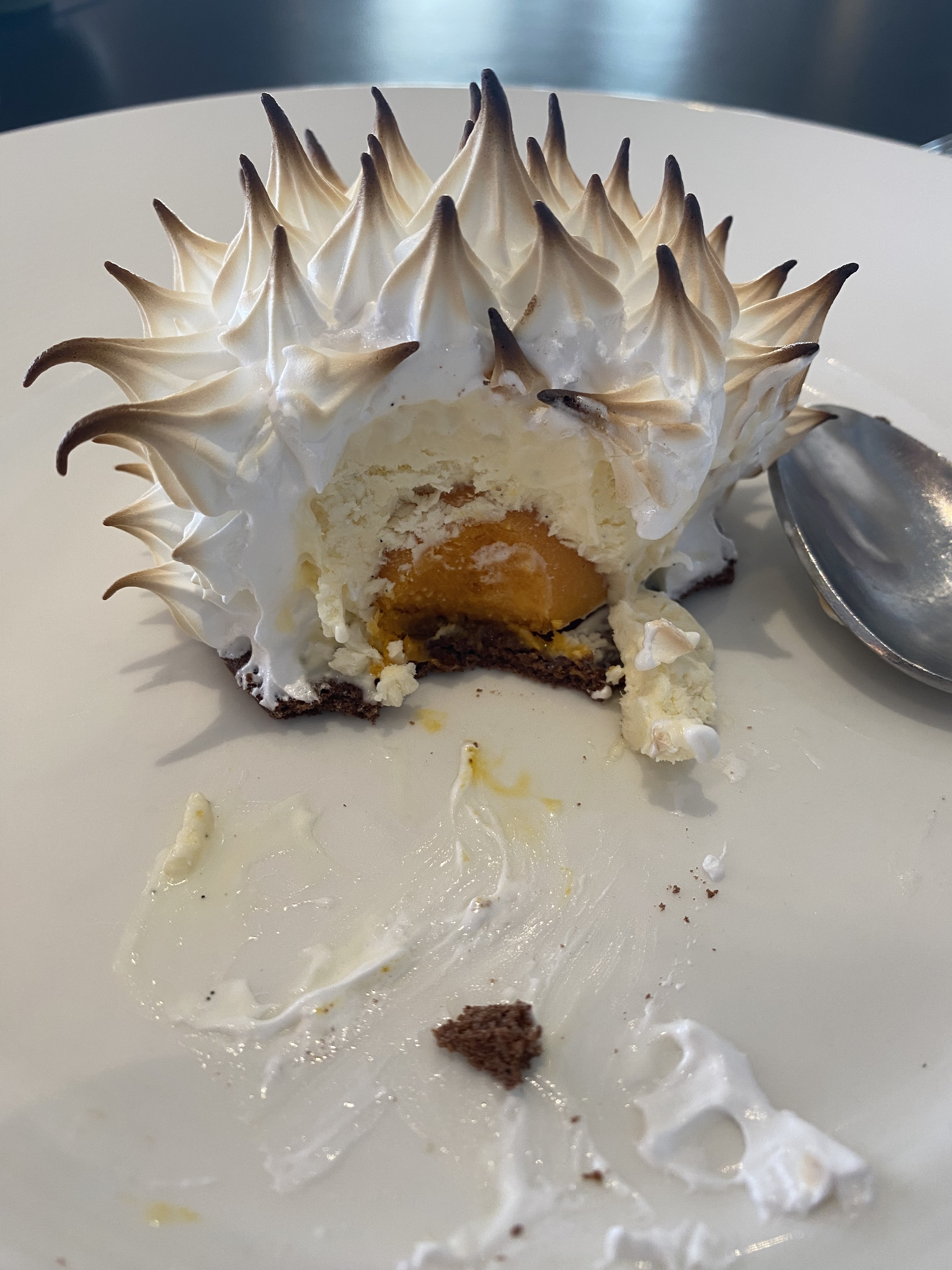
Back at the hotel, I was able to check in. After a shower and some stretching, I watched the icebergs and had an early dinner. Greenlandic halibut with a Mikkeller Greenlandic beer sounded like a good pair. For dessert, I ordered a “surprise”, which was a singed whipped cream sort of thing that looked like a sea urchin with cold sea buckthorn sherbert inside. It was all delicious.
I read all of Last Night in Nuuk and then went to bed. The blackout curtains don’t effectively block out the sunlight here, but that was okay. I set an alarm for midnight, when the midnight sun is meant to be low and stunning on the horizon, but a fog had set in and I couldn’t see the icebergs.
I was not discouraged, though. I had many more days and nights in Greenland to explore, and I’d glimpse the magic of the midnight sun then.

Categories: Greenland

